
LGR AND ASSET TRANSFER Finding the right home for the right asset in the right way
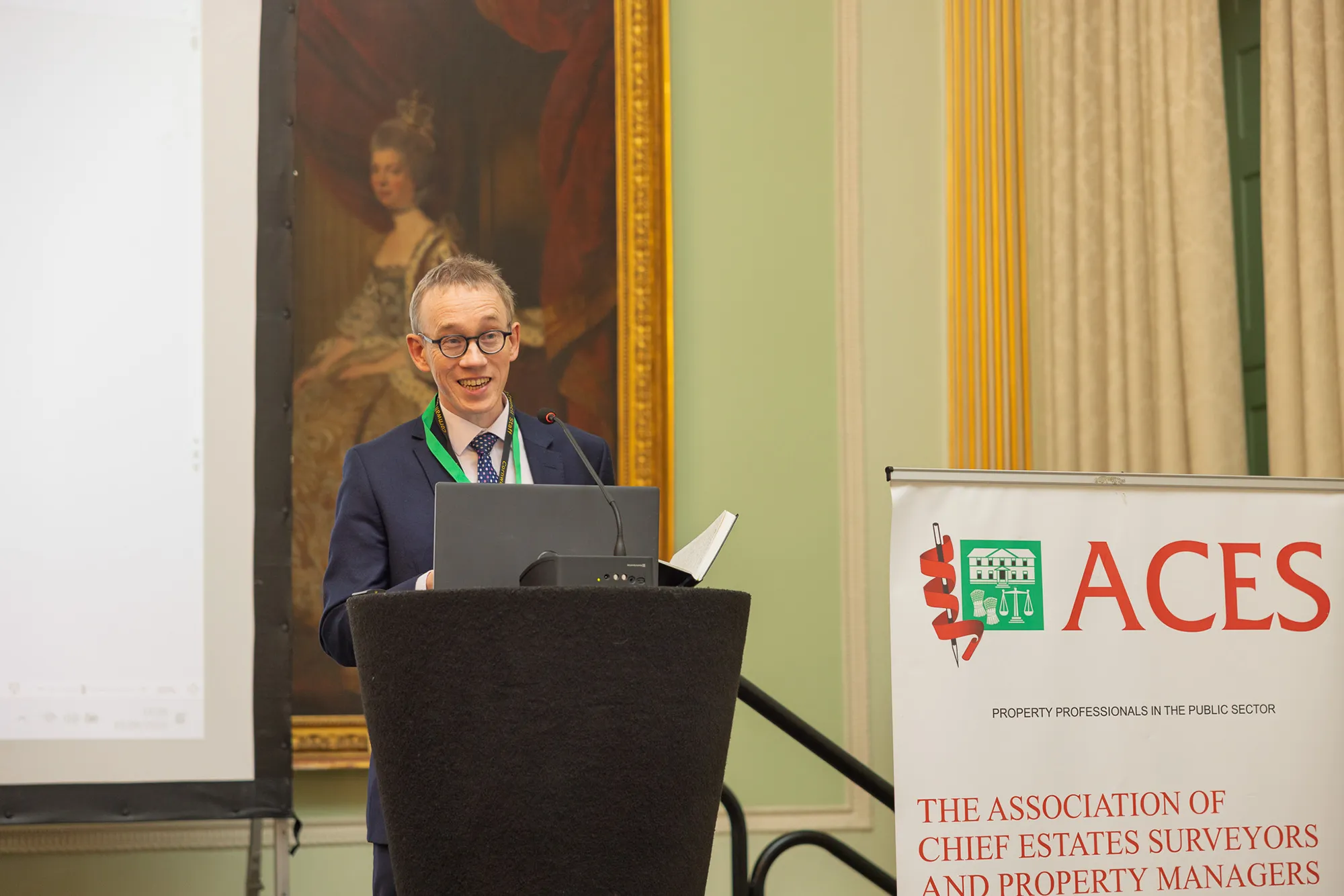
 | Adam is Head of Planning and Housing Policy, Sustainable Growth and Development, at Cornwall Council. Although his work nowadays is focussed on policy, regeneration and community development, he started his career on Cornwall’s County Farms estate, progressing through various roles in property and estate management. At the time Cornwall moved to a Unitary system in 2009, Adam was the lead from the then County Council on property matters. |
This is the promised follow-up article from Adam, based on his experience of LGR for Cornwall Council. It gives food for thought for those colleagues who are now facing LGR. “It cannot simply be thought of as a larger council passing assets down to a smaller council. The conversation needs to be a mutual one about who the right owner of the asset is for that community or for the delivery of the particular services involved.” |
Context
When I presented a few slides and case studies at the ACES conference back in September, I was subsequently carried away by enthusiasm and promised the Editor some further thoughts for a future article. So here we are.
When I presented to the conference, my real thesis was that Unitarisation gave lots of opportunities, but with hindsight we would have devolved more assets more quickly. In this context, for simplicity, I really mean that in the sense of devolution between an upper tier authority and a local (town or parish) council – but of course there are many other variations and bodies potentially of relevance. In that context, I talked about seeing the Unitary process as being more like a shift from three tiers to two, including town and parishes councils as partners in that journey (although for these purposes the conversations do tend to focus on towns because there tends to be a critical mass of assets in those places).
A continuing process
That is not to say that there was not a huge amount we did and continue to do, it’s just that we were all learning as we went and so it sometimes took a long time to broker a deliverable package than it might, with the benefit of the experience we gained. Indeed, the teams still do a lot of work continuing to devolve assets and services 16 years since vesting, which indicates the sheer scale of assets that were and continue to be potentially in scope.
And so, my thinking went, knowing all that, it should mean that areas transitioning to new unitaries could have the benefit of doing more devolution faster with the benefit of that experience. However, the more I have thought about it since, and the more I have canvassed opinion among colleagues in (especially) our town councils, the less sure I became.
I think that is because my original proposition under-played the two-way process involved. It cannot simply be thought of as a larger council passing assets down to a smaller council. The conversation needs to be a mutual one about who the right owner of the asset is for that community or for the delivery of the particular services involved. It cannot be about how the larger council can divest assets to save money, or how a local council can at any cost or risk preserve a really challenging local asset.
And unitaries also have to get used to their new portfolios and there becomes a recognition that the larger and more strategic a council grows, the harder it is to deal with the specific requirements of parks, gardens, hall bookings and community assets it may have inherited. Equally, a town council, fighting hard to retain a much loved local venue, needs to have time to grow the capacity and business case to take such a property on.
A phased two-way process of trust
That two-way process of devolution comes with responsibilities and obligations in each direction. Most importantly, there has to be capacity in the receiving council (or organisation) – the skill, staff capacity, experience relevant to the asset and the funds to sustain the asset or the service. That infers a duty on the devolving higher tier council to ask those questions – not from a position of scepticism but as a critical and experienced friend. And it requires the receiving council to have a very grounded and realistic view of the asset it is getting, but equally the realism not to expect that the unitary can provide a magic dowry or suddenly alleviate years of under investment.
A problem emerges because behaviours will evolve throughout the process leading up to the creation and vesting of a unitary council. There are possibly three periods in which the conversations might be quite different. The first is the time when re-organisation is a concept, but the direction or timetable is not formally concluded, and that creates the environment of nervousness about how best to secure some assets as locally as possible, potentially moving assets between (often) districts and town councils. Then there is the period where more formal controls are in place up to the vesting date, which inevitably creates a bigger sibling dynamic to the relationship, and relies on the governance at the time to make sure conversations are transparent and fair – neither unduly cautious or sceptical, nor overly laissez faire. And finally, there is the period after vesting – when questions of asset transfer and devolution remain just as relevant (evidenced by the fact that we are still having them now – 16 years later), but which are often played out in the cold reality of large scale budget rationalisation.
The risk is that the first two of those periods create conditions where decisions get made, positively or negatively, for the wrong reasons – squeezed by perceived time constraints, rather than in a considered way, because of a fear of missing out – or the worry of losing an asset which might be required for a future purpose of the unitary council, or the loss of a future capital receipt. The main tool to address that should be trust and confidence, backed by good guidance and relationships.
The relationships between officers at town council and Cornwall Council level have been critical to making our devolution work. And relationships themselves require time, investment and nurturing to grow that trust and confidence. And that allows informed and prudent agreements to be drafted where the matter of value can be deferred or controlled, so that it does not create an undue burden on a business case, nor does it get ignored as an issue.
A new approach to asset management?
So how could one create the framework for that in the potentially contested period before vesting. Perhaps it should lead one to an interim asset management plan which the parties can collectively agree to. But what guidance is there that would suit that purpose? There is the RICS practice note on Strategic Asset Management in the public sector. There is guidance around community asset transfer (see for instance Locality’s document Building Powerful Communities through Community Asset Transfer (CAT)). And there is the concept of Asset Backed Community Development (ABCD)– which takes a much wider view of assets than the property definition. But they are three quite different stand points.
The question of devolution needs to have regard to all of those standpoints exemplified in those reference points. However, my reflection (with the benefit of Christmas reading) is that the RICS Strategic Public Sector Asset Management Practice Information does not talk to this point as much as it might. It opens with a definition of Strategic Asset Management as being the “aligning [of] property assets with the strategic aims and direction of the organisation and adding both financial and non-financial value to the organisation as a result”.
But is that what councils should really be doing, if reading alongside the concepts of CAT and ABCD? What would happen if we changed that definition for the public sector to “aligning property assets with the needs of our communities and enhancing the financial and non-financial sustainability of those places in which we work” (while acknowledging the clear and important fiscal and legal duties on members and officers of the devolving or receiving authority to not put their own organisation at risk and remain compliant with those duties).
And perhaps that is the opportunity and need that exists now – a toolkit capable of helping decision makers navigate the complex, contested and emergent journey towards a new unitary in terms of asset devolution. Bringing together guidance on community asset transfer with strategic asset management and a dose of asset based community development. Recognising where gaps in capacity exist, but finding ways to create time for conversations rather than having to jump to conclusions too early.
And if we had our time again? Perhaps it is not about thinking we could just have done it faster, but accepting that it takes time to learn who is best to provide what services with what assets. And the best thing perhaps would have been to effectively create a change and capacity building programme for local councils at the same time, wherein would lie the makings of a business case for investment in capacity in local councils that paves the way for them to receive (or be wise enough sometimes not to receive) relevant assets.
Adam suggests that there may be a role for ACES to lead on preparing a toolkit or working paper on how to navigate in a timely fashion the new roles to align assets to meet the new roles and community needs. See also Neil and Chris’ article which follows and raises similar thoughts.


Comments