
LOCAL GOVERNMENT REFORM IN PRACTICE Property and community
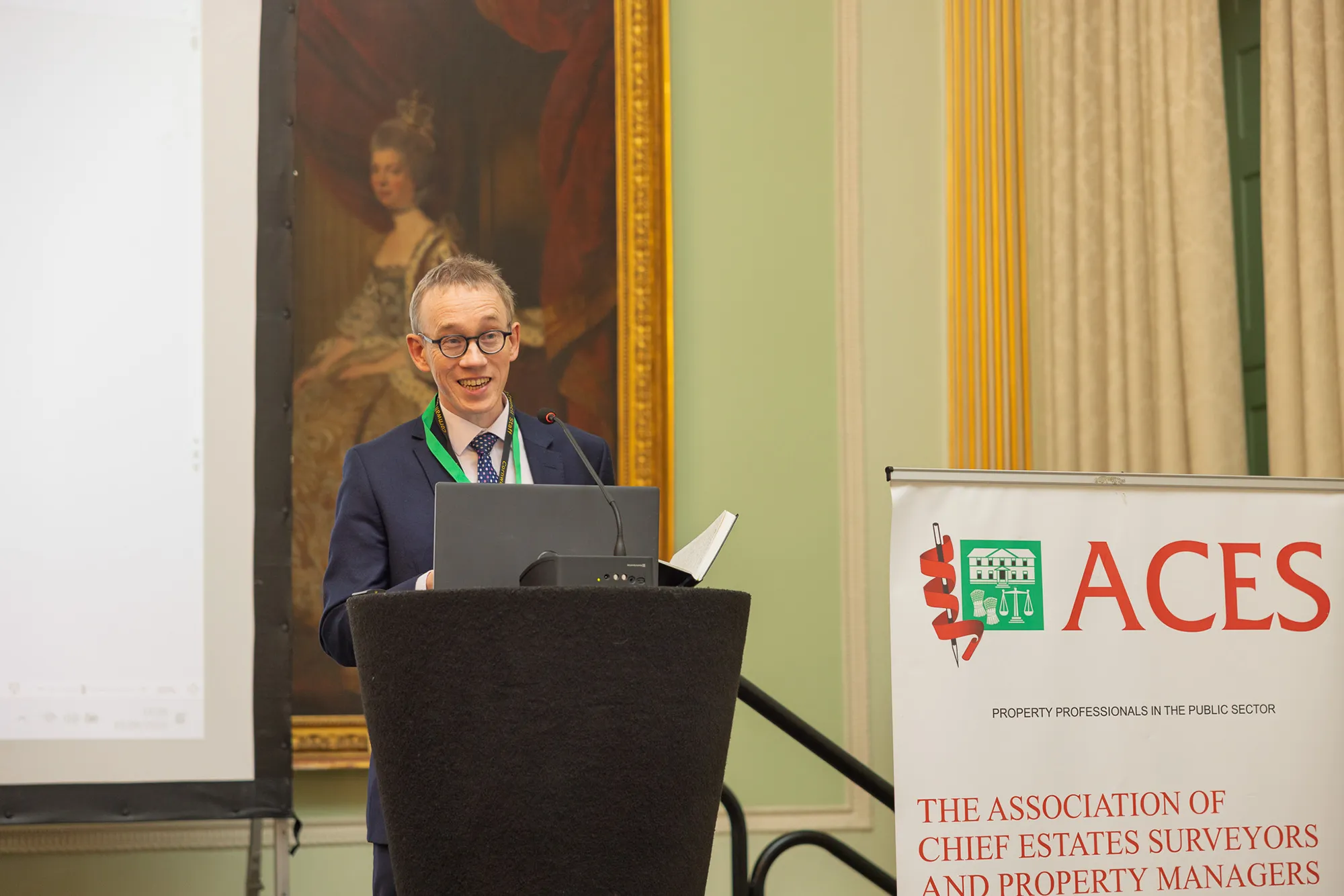
 | Adam is Head of Planning and Housing Policy, Sustainable Growth and Development, at Cornwall Council. Although his work nowadays is focussed on policy, regeneration and community development, he started his career on Cornwall’s County Farms estate, progressing through various roles in property and estate management. At the time Cornwall moved to a Unitary system in 2009, Adam was the lead from the then County Council on property matters. |
This is a summary of Adam’s presentation at ACES National Conference held in Bath in September. Cornwall moved to a unitary system in 2009. Adam offers a perspective on that transition and the subsequent and ongoing lessons of integration and progress from the 16 years since then, focussed on the role of a local authority property estate in supporting systemic service change, and seen largely through the lens of 10 property assets. |
Context
Adam was the Property lead for the County Council, but a key task was setting up a new series of one stop shops, which involved working with town and parish councils and led in to the world of devolution, community development and panning.
Context matters. Many of Cornwall’s administrative bodies are co-terminus within the identifiable borders of Cornwall. We have a border with Devon – the rest is sea. So although there was some debate about the principle of a Unitary Council and its form, there was also a very natural coalescence of 6 districts in the same geography as the County Council within an identifiable boundary. That will not be the same for everyone – and it possibly did not feel like it for us at the time, but that is the benefit of hindsight of 16 years. We are also entirely parished, which will be different for some of you. And all the usual population worries of a rural, peripheral council – a growing older population and a declining working age population.
40% of us live in settlements of less than 3,000 people. And our biggest towns are mostly in the 5-10,000 bracket. The population in 2009 was 525,000 and is now 575,000. There are 258 schools, of which over 80% are now academies; country parks, ex-mining shafts, offices, social care, libraries and leisure buildings – the usual diverse range of assets.
For this presentation, while it would be really dull just to have a talk about the particular nuts and bolts of the mechanisms, Adam tells the story through 10 different property assets and what happens when you put districts and a county council together.
Lessons of LGR in 10 assets
It is 16 years since the County Council was established, and society, the economy, the environment and government are all different now – so I thought I would focus on the things that don’t change – which is essentially people’s response to public property in their community.
Asset 1: Bodmin Shire Hall – 1974 still matters

In 1974 most of the assets ended up with a town council – here, Bodmin Town Council, which was very proud to have secured the assets – meaning the unitary inherited very little estate in the town. Now there's a twist in the tale because those assets, three large granite buildings, rapidly became a big headache to the town council in how you then manage and repurpose them: one is turned into a cinema, one's still empty, and the council offices (shown in the picture) are located there.
This contrasts with Penzance below, where very similar assets went to the district council in 1974, and so to the unitary in 2009.
Asset 2: St John’s Hall, Penzance – New life in old buildings

This building has real soul to it. It had become moribund: well loved, but little used. But in a classic story of rationalisation, the inheritance of a wide range of both county and district assets including multiple social services offices, a sprawling former district HQ – and pictured St Johns Hall - combined and resources enabled us to bring services together in a building in the town, rather than at the edge of town, and release the former district HQ site for housing and a long sought after site for a new GP surgery – all now complete.
Asset 3: Chy Trevail – Bringing services together brings challenges as well as opportunities

A former NHS site was first master planned by North Cornwall District Council in 2005. Cornwall Council was able to acquire the site, and is now midway through the second of two phases of housing delivery. It also delivered new offices to replace a wide range of other disparate assets. However, the efficiencies of bringing everyone together – including services from taxi licencing, to registry, to children’s services, and housing, means that the atrium has to cope with a vast array of uses – some very sensitive, some joyful, some sombre, and some purely transactional – as well as a meeting place for staff. So spatial efficiency comes with challenges. There also remains a tension between these sorts of schemes and high street presence.
Asset 4: New County Hall – The HQ matters
Status, the ceremonial centre of a new authority, makes a difference - if only based on which former council has a large enough council chamber. We started with 123 members and only County Hall, Truro had that capacity, and associated suites of committee rooms in one place. So pure practicality drove those decisions. I can imagine that being a much more contested conversation, depending on the constituent councils and geographies coming together for other LGR regions.
Asset 5: Luxstowe House, Liskeard – Civic pride matters

Adam describes this as a “real basket case of a building “.There was significant sensitivity to the status of market towns which were home to former district HQs, that a conscious early decision at the time was to accept that the unitary would balance efficiency of co-location against the sense of place and pride, as well as access to services, in a large dispersed geography. The situation was not helped by Covid. Liskeard perhaps felt this more than others, with also losing its cattle market (Asset 8) and this building has remained one of the most challenging; it is only now being untangled for Extra care use.
Asset 6: Langarth Garden Village – Scale gives new opportunities but also requires new skills
And then on to large scale development, which the sheer scale of Cornwall Council makes possible in terms of assembling and driving forward a scheme of over 500 acres and 3,800 homes at Langarth, including infrastructure of roads, schools and open spaces with associated compulsory purchase. It is a £150m project. My property colleagues have to manage the meanwhile uses and compliance of multiple properties we would not otherwise have bought.
Asset 7: Penwinnick Offices, St Austell – Using the combined jigsaw pieces to address social care and housing
This is another illustration of the time it takes to get to a new strategy and an acceptance of how to make best use of assets. The former district council offices sat next to some former social care offices of the former county council estate, and a school. It has taken 16 years for that journey and again, Covid probably played its part in changing our relationship with the offices. There is finally a deliverable housing scheme and new town centre offices – themselves placed in a failing early 2000s town centre regeneration scheme.
Asset 8: Liskeard cattle market – New opportunities arising from old assets
A former cattle market and car park reuse is evolving, working with the community into the opportunity to create a new workspace for local, mainly creative businesses, and complete new office building being provided as a local hub. The role of the car park, much cherished by the town centre businesses, is protected. Again this is a story of patience: “ We have had monthly coordination meetings for the last three years across about 10 different services in the council, all of whom have a role, all of whom every month consistently take it in turns to either surprise the other nine people around the table about the latest idea or action they've taken, and the other nine take it in turns to be consistently grumpy that no one told them what was going on.”
Asset 9: Coronation Park, Helston – Learning to let go

I think this might be the most important lesson - learning to let go. We used to agonise about transfer of these assets – why?! Assets like parks and gardens that accidentally, because of 1974, got swept upwards into the unitary council, which ends up with it trying to cope with the minutiae of what bedding plants are appropriate in the park. These assets are just much better off being managed locally by those parish and town councils or community interest companies, whatever the local structure is. Coronation Park, Helston and the local CIC which runs it, illustrate the pride and the opportunity that's been created that just couldn't have been achieved in the structure of the county council for an asset like that.
Asset 10: Truro Library – Remembering how assets came into the council

And so to libraries. The stone in the image says a lot - the plaque from when the building was endowed and created by local benefactors. The assets that we have in our portfolios now are a temporary aberration because they've happened to end up with this authority, and our job is to be the best stewards of them in the moment. We agonised about the future of Truro library in particular, the senior library in a way, and were reluctant to let go - the work and governance required simply to get the building back into ownership of the City Council was a challenge.
Libraries

|  |
This was largely the work of my colleague Julie Zessimedes to devolve most of our libraries to mostly town councils and some third sector organisations. The two images list their current uses, which has been possible with the help of £16m of Shared Prosperity Funds to transform all Cornwall’s libraries. But without that partnership and without the ability to have a vision for the use of those assets, that grant funding would not have been secured, and we would still be looking at some rather sad granite buildings and a library service struggling to keep itself going. But there is local ownership, local championship of them now.
Torpoint is the most unprepossessing building, and I'm sure many of you have some pretty unprepossessing buildings in your portfolios. But what goes on inside that building since we transferred it to Torpoint Town Council is just incredible in terms of the outreach work in the community, and that community involvement across a whole host of little projects that exist in that building. This is particularly important because the major naval base of Devonport is just across the water, with one of the highest proportions of veterans in its community.
Leisure

Again, we inherited a relatively diverse collection of leisure centres and assets including one PFI scheme. A range of solutions have been chosen - some have become community trusts and they sit within the wider framework of the recently adopted leisure strategy. That leisure strategy brings together two different components: the place-based assessment, to work out how those assets make a difference and what their role is in our towns and places, and the facility assessment, in terms of the activity that's going on in the community.
We have been able to bring other services into and co-locate in one leisure asset, to make good use of it and that has been really important for the business case to keep it alive. Being proactive can unlock local capacity and resource to bring life or keep life in the buildings.
Overall reflections
The vesting day of the new council is not the finish line; it’s barely the first quarter mile of several marathons (and at least 16 years)
Learning to devolve and let go; it is really important to find the right home for the right asset
Working to create capacity in town and parishes to do the things they can do better
View assets as part of a community conversation, not a spreadsheet – assets can be part of the soul of a place viewed through all those different lenses of the community who use and interact with them every day. They are that solid identity of the council.
Ed – Adam has agreed to write in Winter Terrier about the nuts and bolts of LGR.


Comments