
MORE MUSINGS How good is your memory?

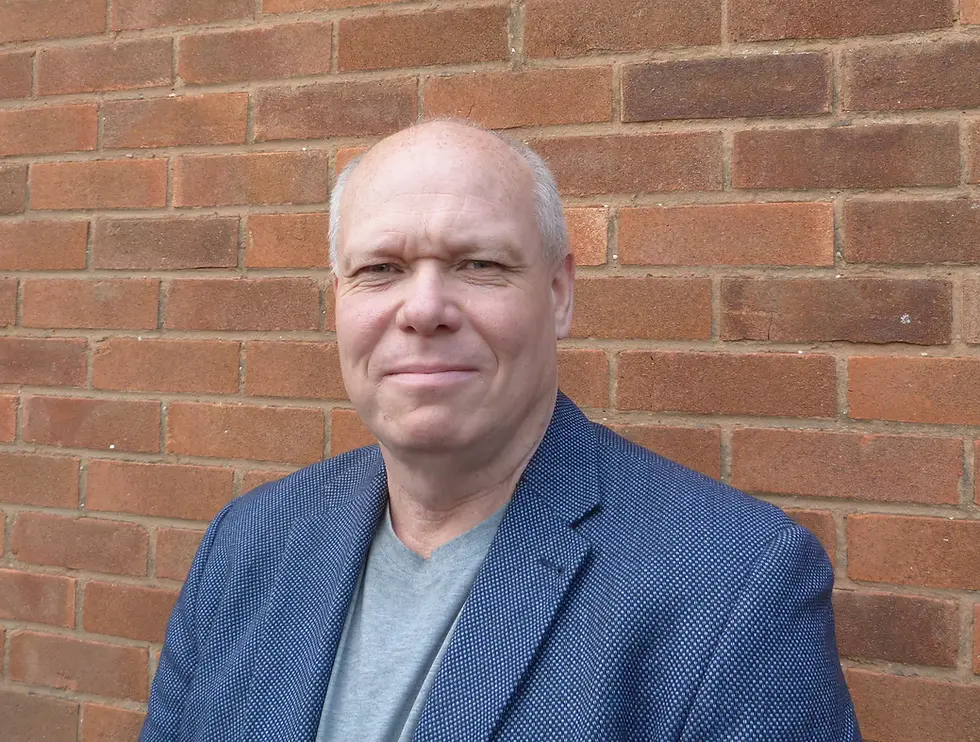
 | Simon qualified as a chartered surveyor in 1980. He started his career in the commercial field, moving to private practice in 1983. In the mid-1990s he joined Great Yarmouth Borough Council and in 2006 moved to Waveney District Council (now East Suffolk Council). He retired in 2018. |
More recollections and coincidences from Simon. |
Redundancy
Thirty years ago in October 1995, I was made redundant and was asked to leave my post as Agency Manager at a commercial practice in Norwich. The previous December the Agency Partner retired and I was given the opportunity to succeed him.
I moved downstairs to the ground floor of the office and started to change my approach to a new area of responsibility, after nine years dealing with professional work concentrating on lease renewals, rent reviews and other professional issues.
I was not offered the position until mid-December with the intention that I take up the post in January. It was known that the partners were trying to make an external appointment, but they were unable to do so, and the only other option was an internal appointment. While this was not what I wanted or expected, it was clear that there was only one option available to me. The partners advised the clients of my appointment once I had accepted, but several stated that they wanted me to complete my current cases. This involved some difficult internal negotiations. The partners wanted me to start on 1 January and I was able to complete the majority of the outstanding professional cases by April.
I led a team of two, under partner direction, and while there were some challenges, I started to enjoy what I was doing. There was the opportunity to let some significant buildings, but I had some difficulties with one particular assignment. I took instructions from the tenant of a large office suite seeking an assignee and I met the office manager at the property and reported in full once I had completed the inspection. Their reply to the terms for acting on their behalf came on their headed notepaper with a list of directors at the bottom, including the name of my father! I had found out that morning that my father was a non-executive director of the client company!
I was asked by one partner as to why I had not declared this – did I not remember my previous difficulties with the RICS regulations on conflict of interest - when I accepted the instruction to find an assignee? I replied that I did not know of this particular appointment. I repeated that where I knew there was a conflict I would advise all parties. I did not discuss any of my work with my father and had no right to a copy of his client lists or those of his firm.
Unfortunately, things did not improve and in October 1995, after nine and a half years, I was made redundant. The redundancy process was difficult and I had to instruct a solicitor. The financial terms were satisfactory, but the remaining terms took a long time to complete. The principal matter of concern was to ensure that there were to be no future professional indemnity issues. I did not want them to pursue me in the future. I expected a clean break in these circumstances.
I needed to secure another post, but these efforts were hampered as they were not prepared to confirm my departure to clients. I was being made redundant, but clients were told I was “not in the office” or “I had not come in that day” and the uncertainty was causing difficulties. However, as it became public knowledge that I had been made redundant, the approach had to change.
My Compromise Agreement was completed shortly after I left the office in mid-October. It was a difficult month, but I did actually have positive support from one of the two partners. I brought my CV up to date - I had not amended it for nine years - and started to seek a new role. Some were locally based, but I did look at the possibility of working further afield, but my hope was to remain in an area which would allow my wife to continue her role at the hospital and ensure continuity for my children’s education.
From private to public
I made many applications both local and national - I was fortunate to receive the Estates Gazette every week - and eventually I started to secure some interviews. Thirty years ago my job applications were completed either on paper forms sent by the company, or by letters with an accompanying CV. There were no electronic applications that were to become the normal approaches as I got older.
It was a difficult time. Many friends and fellow surveyors gave me both helpful and generous advice and after two or three unsuccessful interviews, I was invited to one at Great Yarmouth Borough Council (GYBC). I had an interview in late February and started there on 4 March 1996. At the age of 41 I made the move from private practice to local authority and started a second journey which finished in May 2018 when I retired from East Suffolk Council. I left an office with a wonderful view of Norwich Cathedral to a second floor office in what was a converted fire station.

RICS roles
Alongside the redundancy, I had decided to stand down as the secretary of the RICS East Anglian Branch - partly as one of the partners was the Branch Senior Vice Chairman and both he and I felt that the most sensible option would be for me to step aside as Secretary. The other reason was that I felt I should take a break from RICS responsibilities and concentrate on the new challenges of working for a local authority which held a wide range of property assets concentrated primarily in two principal centres of Great Yarmouth and Gorleston, but there were also assets located in other towns in the authority area.
However, shortly after I started at Great Yarmouth I was asked if I would consider assuming the role as Chair of the East Anglian General Practice Committee. I had not been involved with this committee but felt honoured to be asked to effectively parachute in as chairman, as the incoming chairman had moved away and the vice chairman was unable to take up the position. I thought about the offer for a week but, with approval from GYBC, l accepted the position in May 1996.
The role turned out to be both varied and interesting and I remained on that committee until December 1999 when the RICS replaced the branches with the regional approach. The East Anglian Branch area covered the three counties of Norfolk, Suffolk and Cambridgeshire and I knew some of the committee members from Norfolk. Those from Suffolk and Cambridgeshire were extremely welcoming and over time some became good colleagues.
One of those I met at these meetings was Betty Albon! She was, at the time, the Branch representative on the General Practice Divisional Council. She was always, and still is, full of positive ideas. When she stood down as the representative a year later, I was invited to succeed her. It was then that I discovered from the RICS GP divisional secretary at RICS headquarters, who was a good school friend of mine, that I was succeeding a strong representative who made an impact and I had a hard act to follow! Public sector chartered surveyors were in the minority but that was no barrier to putting the public sector view forward.
Never too late
I started at GYBC in March and joined the RICS committee in May, and in July found a copy of my GCE A level results from 1972. I had never actually passed my English Literature A Level which I took twice as a teenager. I failed the exams the first time at school and got an “O” level pass the following year at Norwich City College. I decided that I would have another attempt, so I enrolled at Norwich City College on a one-year evening course. I enjoyed the challenge – some of the texts were those I had completed in the earlier exams, but others were new to me. There were two Shakespearian plays and The Miller’s Tale, one of Chaucer’s Canterbury Tales. New works included the Tennessee Williams’ play “A Streetcar named Desire” and two modern novels “The Handmaid’s Tale” by Margaret Atwood and “The Magic Toyshop” by Angela Carter.
The following June 1997 I took the exams and in August heard that I had passed the exam with a grade D pass. I hung the A level certificate next to my RICS Certificates!
I still have the exam papers. One exam question was to read two passages of text written by Vera Brittain describing a visit to Somerville College Oxford in March 1914 and published in her “Chronicle of Youth” – her war diary 1913 – 1917. The second passage was her reflections of the same visit published in 1933 in “Testament of Youth.”
I was asked to “comment on differences in context and style between the two passages and how did I account for these differences.” My notes on the exam paper seem to suggest that as time goes on, the ability to remember detail is diluted. However, in the two pieces there are some aspects which are repeated with equal clarity, but in the second piece there is the opportunity to reflect upon the past.
How does this apply to me? Thirty years on - is what I have outlined above an accurate record?
Some aspects are still clear in my mind– others may be slightly exaggerated. I could have reviewed what I wrote in my diary at the time, but as with the exam question, perhaps it is better to reflect on what has happened, rather than set out the whole details.
As time has moved on, my initial reservations and concerns that I may have had in leaving private practice and entering the public sector were unfounded, as greater similarities emerged in the approach to work over time.


Comments