
SEVEN NEW TOWNS One big opportunity - What England’s latest growth programme means for places, investors, and developers
  | Nyear is a chartered surveyor and member of the Compulsory Purchase Association. Having worked in the property sector for around 20 years, she started her career working for North West Regional Development Agency helping to deliver regeneration schemes, often backed by compulsory purchase powers. Over the last 10 years, she has worked in various roles at LSH and is currently the Head of Land Assembly and Compulsory Purchase in the southern regions, supporting a range of clients in both the public and private sector in delivering regeneration and infrastructure. Rebekah is a Director in the Town Centres and Economic Regeneration team at LSH, where she leads on shaping and delivering strategic advice to public sector clients across the UK. With a strong focus on place-based transformation, she works with local authorities and other public bodies to unlock the potential of public assets – helping to secure investment, drive regeneration, and deliver outcomes that matter to communities. Rebekah brings a wealth of experience in aligning estate strategies with broader social, economic, and environmental goals. In 2023, she was appointed to the Board of the Institute of Economic Development. |
Another complementary article about the potential of the new towns proposals. “The seven new towns reflect renewed confidence in strategic growth and a recognition that housing delivery must sit within a wider economic development mission." |
The consultation
The government has recently identified seven locations it intends to take forward as England’s next generation of new towns.
The New Towns Draft Programme Consultation opened on 23 March 2026 and is running until 19 May 2026. It is seeking views on how the programme should operate, including the proposed locations, delivery models, design and planning policy, and the government’s ‘offer’ to participating areas. It also includes a Strategic Environmental Assessment examining environmental constraints, cumulative impacts, and mitigation requirements.
Final confirmation of the programme and locations is expected in summer 2026.
This announcement sits within the government’s broader new towns programme, which ministers have characterised as the most ambitious housebuilding effort in decades. It signals a shift toward large scale, strategically master‑planned growth, with implications for local economies, infrastructure investment, and the development market.
Key points from the New Towns Draft Programme Consultation
Programme design and delivery models
The seven proposed locations
Strategic Environmental Assessment and environmental constraints
The government’s ‘offer’ to new town areas
Final confirmation expected summer 2026.
A national programme with local economic potential
The seven chosen locations are shown on the map and are listed.

Tempsford – Central Bedfordshire
South Bank - Leeds
Crews Hill and Chase Park – Enfield
Victoria North - Manchester
Thamesmead – Greenwich
Brabazon and the West Innovation Arc – South Gloucestershire; and
Milton Keynes – Buckinghamshire.
They have been selected for their capacity to deliver transformative growth. Several are expected to deliver up to 40,000 homes, supported by integrated transport, new schools, green space, and employment hubs.
The government's intention is to build “whole communities” where homes, jobs, infrastructure, and liveability are planned together. This aligns with emerging practice in regeneration, where economic development, land use and transport planning are integrated from the outset.
The consultation also sets out the methodology used to assess locations, offering insight into what the government considers deliverable at new‑town scale.
Where the biggest opportunities will emerge
Greater Manchester – Victoria North
Delivering 15,000 homes, Victoria North is one of the UK’s most advanced regeneration schemes and now reaffirmed as a national priority. Strong local leadership and existing momentum reduce delivery risk and strengthen investor confidence.
South Gloucestershire – Brabazon and the West Innovation Arc
With up to 40,000 homes linked to a research and advanced engineering cluster, this area offers significant economic potential and growing demand for mixed‑use, higher‑density urban living.
Leeds South Bank
South Bank will deliver around 20,000 homes, building on Leeds’ position as one of the UK’s fastest‑growing city economies. It exemplifies city‑centre intensification that supports commercial expansion and improved connectivity.
Thamesmead and North London Growth Areas
Thamesmead (15,000 homes) and Crews Hill/Chase Park (up to 21,000 homes) will help meet London’s acute housing needs. Thamesmead’s growth is supported by planned Docklands Light Railway extensions, an example of transport‑led development shaping new communities.
Sites not taken forward – What happens next?
Six shortlisted locations – including Adlington, Plymouth, Heyford Park, and Wychavon Town – will not proceed as new towns at this stage. However, the government has indicated they may still receive other forms of support.
Maintaining momentum in these places will require using existing spatial frameworks, investment zone opportunities, or Homes England partnerships to ensure development ambitions continue.
Key challenges: Deliverability at scale
Delivering seven new towns concurrently will require:
Major upfront infrastructure, including rail interchanges (e.g., Tempsford’s East West Rail hub) and light‑rail extensions in London, along with other services and utilities needed to support these new town locations, including road, energy, and water
Complex land assembly in both urban and edge‑of‑city contexts. Co-ordination of powers to deliver these will sit across a number of enabling statutory processes, such as highway, rail, regeneration and utilities. Aligning these powers and statutory processes will involve careful consideration and co-operation among multiple agencies and public organisations
Careful viability management, given the requirement for 40% affordable housing (including half for social rent)
Alignment with local economic strategies, ensuring housing growth supports jobs, skills, and investment.
The consultation also seeks views on delivery structures such as development corporations, public‑private partnerships, and new land‑assembly approaches, along with the government’s proposed support offer. These decisions will directly influence risk, timescales, and investor appetite.
What does this mean for the market?
For developers, housebuilders and investors:
Greater pipeline certainty across multiple regions
Infrastructure‑led development enabling new commercial hubs and innovation districts
Rising demand for strategic advice around viability, land assembly, commercial positioning and partnership structures.
For local and combined authorities:
A clearer framework for long‑term spatial planning
The need for robust, flexible delivery models (such as development corporations, local regeneration partnerships, and joint ventures).
The LSH view: A turning point for 21st‑Century place‑making
The seven new towns reflect renewed confidence in strategic growth and a recognition that housing delivery must sit within a wider economic development mission. By planning transport, green infrastructure, social facilities, and employment land from the outset, government aims to avoid fragmented, piecemeal development.
Since coming into power, the government has also brought forward planning and CPO reforms, in readiness to deliver on its housing and infrastructure commitments. As well as procedural reform to streamline process publicising a CPO, acquiring authorities can now confirm their own CPO (albeit in limited circumstances). This, combined with other provisions to remove hope value, are designed to speed up the confirmation process to enable delivery of schemes without delay.
There is no doubt many delivery bodies, which will include Mayoral Development Corporations, as well as local authorities and developers, will require the use of CPOs to deliver these seven new towns. The government has also reformed the compulsory purchase code, to dispel any concerns around uncertainty and delay, and increase use of powers to ensure delivery of its housing agenda.
Want to explore what this means for your area or investment plans?
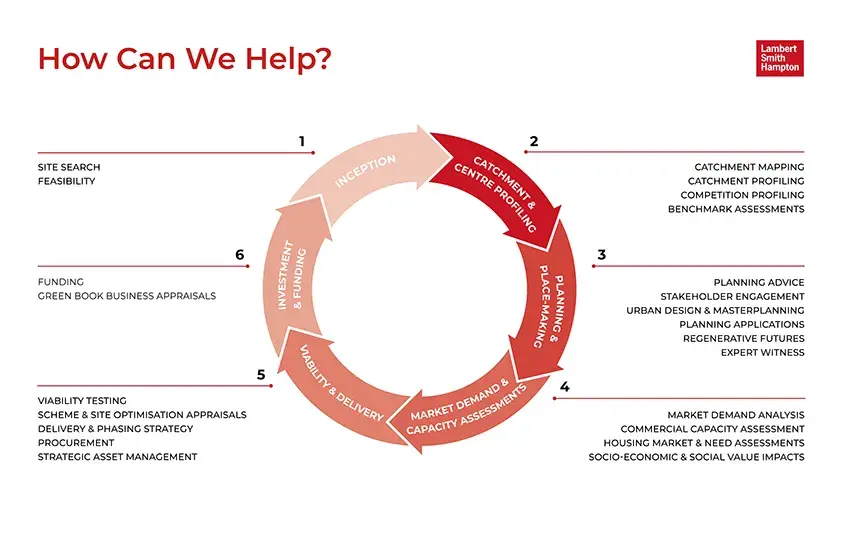
LSH is helping to plan, shape and deliver thriving, viable and sustainable communities across the country. We are advising our public and private sector clients on the delivery of high profile new towns, housing and regeneration programmes, including Northstowe for Homes England and Meridian Water for London Borough of Enfield.
Our multi-disciplinary team advises at all stages of the property and development lifecycle, including planning, urban design, land assembly, development consultancy, financial viability, agency, and specialist town centre and economic development advice. We would be delighted to discuss opportunities arising from the new towns announcement and how LSH can support your visions and ambitions.
References
To explore how we can support the future of your town, read our:


Comments