
SHAPING TOMORROW’S PLACES Does a new era of Government herald a new dawn for the revitalisation and regeneration of our centres?
Updated: Oct 29, 2025
 | Dr Steven Norris MRTPI is an Executive Director at Lambert Smith Hampton (LSH) & national head of the Planning, Regeneration + Infrastructure business. He also heads up LSH’s specialist Town Centre & Economic Regeneration team, and has advised on town centre planning and development for over 32 years. Steve was previously an expert adviser on the Government’s High Street Task Force up until is dissolution in 2024. He also sits on Revo’s Regeneration Committee and New London Architecture’s High Street Expert Panel. |
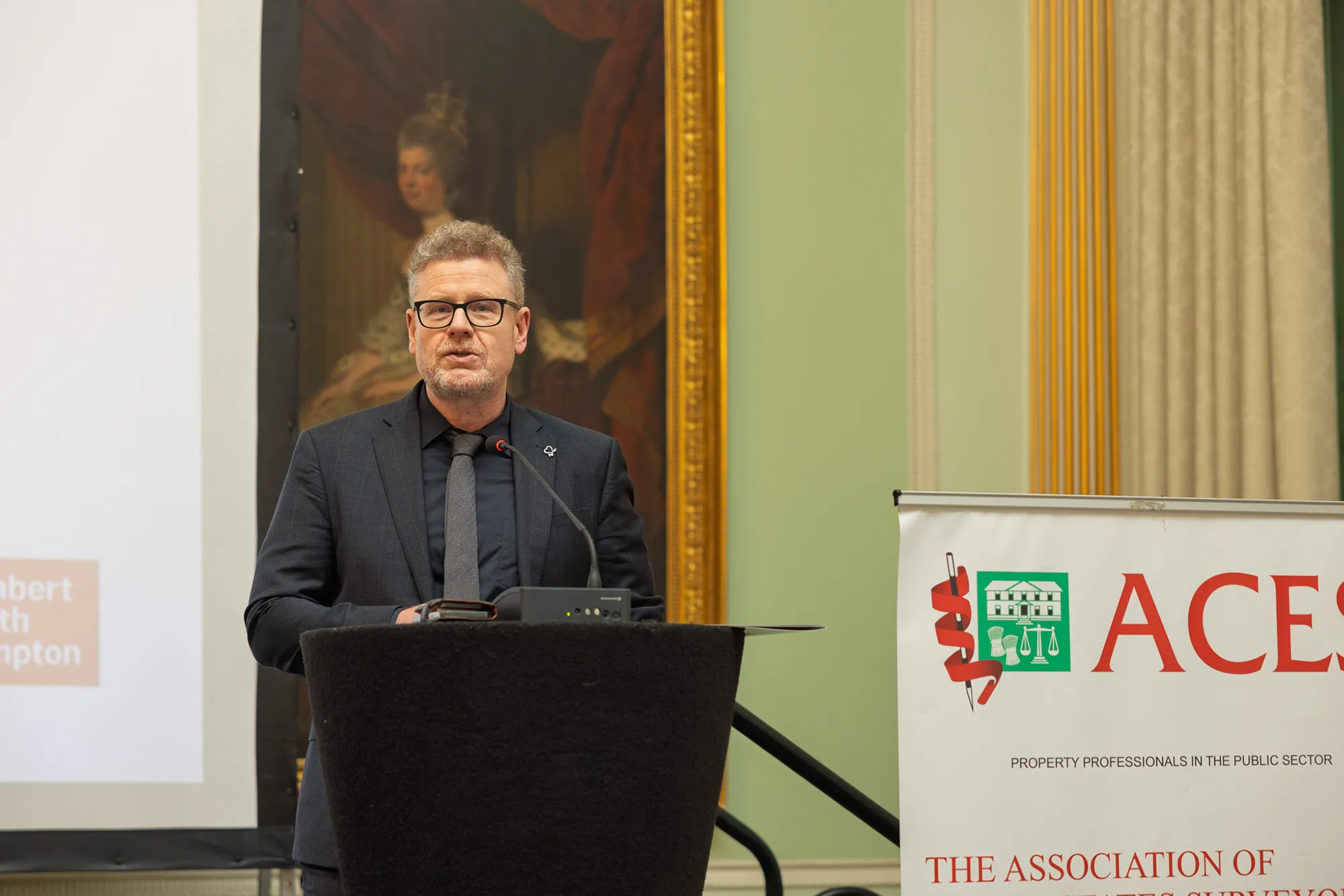
This article is a summary of the “Shaping Tomorrow’s Places” presentation by Dr Norris to the ACES Eastern Branch in Ipswich on 20 June 2025. It draws on the findings of the 6th annual LSH online survey conducted earlier this year in partnership with Revo and supported by other partners, including ACES, the Association of Town & City Management, UK Hospitality, CIPFA and the British Property Federation. |
Introduction

Since the first report in 2020, the research has provided a barometer on the health of our centres and high streets, and the opportunities to deliver their long-term regeneration.
This year over 250 stakeholders from the public and private sectors responded to the survey, including local authorities, investors, developers, owners, and town centre managers. All have a vested interest and active role in the planning, management, funding and development of our towns, high streets and shopping centres.
The LSH/Revo report is wide-ranging and addresses a number of key questions, including:
What are the main issues and challenges facing our centres?
What initiatives and actions can help shape and deliver their future recovery and renaissance?
Who is best placed to lead and fund the regeneration of our centres?
What are the future prospects are for our centres?
The full report is available on LSH’s website (http://bit.ly/4mNQ3TL).
The following sets out some of the main headlines from this year’s report:
Beyond retail
Since the first LSH/Revo research in 2020 most respondents have consistently identified our centres have too much retail: 62% this year believe between 20% to 39% of space is no longer “fit for purpose”.

It is therefore no surprise that the redevelopment and repurposing of vacant retail space is also the top ranked initiative again this year (identified by 69% of respondents).
This confirms the scale of the structural challenges our centres are facing, and the need for radical surgery in some cases. But if retail is no longer the solution to the regeneration and renaissance of our centres, what is?
The responses to the LSH/Revo survey are clear. Our centres need to adapt and diversify beyond retail to help build their resilience. They need to provide more flexible space, and a blended mix of uses that can respond to dynamic economic, consumer and market trends.
When asked what optimum mix of uses and services are needed to help underpin successful and viable centres over the next 5 years, the hospitality sector ranked 2nd (59%); albeit down from 1st in 2023 and 2024. Over two-fifths (43%) of respondents also called for more and better-quality public realm, green spaces and open spaces. Healthcare is ranked 5th (37%), the same as in 2024.

However, for the first time, the provision of new mixed tenure homes is the top use; identified by over two-thirds of respondents and up from 59% last year.
Town centre living
Building more homes in, on top of, and on the edge of our centres will be key to supporting their future recovery, as well as tackling the housing crisis. Our cities and towns are, after all, the most accessible and sustainable locations for new housing. However, many failing centres are unattractive places to invest, develop and live in. Some of the barriers impacting on viability and the delivery of new homes in our centres include low residential values, complex sites, fragmented ownerships, planning delays, and poor town centre environments. This is confirmed by the results of the LSH/Revo survey, with respondents calling for faster planning decisions, a reduction in construction costs and the need to create more attractive environments to help promote investment in town centre living.
Leadership and governance
In terms of who should lead the regeneration of our centres, the responses to the LSH/Revo survey once again confirm it is the responsibility of everyone. Partnership-working and collaboration between all stakeholders is and will continue to be key to driving forward the future recovery and renaissance of our centres.

The survey results also show the momentum behind devolution and local government reform, with Mayoral and Combined Strategic Authorities leaping to 3rd from 7th last year. The responses to this year’s survey also confirm the widespread support for devolution; with 61% believing it will have a positive impact on the planning, funding and regeneration of our centres, and only 12% stating it will have an adverse impact. It will be interesting to monitor whether and how opinions on the impact of local government reform and devolution change in future surveys.
Investment
Strong leadership will need to be backed up by significant investment in our centres. But what funding sources are available to support critical regeneration and infrastructure projects?
Top of the rankings again in this year’s survey are joint ventures and public-private partnerships. This has consistently been the preferred investment and delivery vehicle since our first research report in 2020.

Notwithstanding the financial constraints and substantial debts many local authorities are weighed down by, they are still ranked 2nd by respondents to the survey as key investors in our centres.
On this point, it is also interesting to note the series of capital funds (e.g. Towns Fund, Levelling Up Fund, etc.) introduced by the previous government to help support council-led regeneration and infrastructure projects have fallen to 12th in the rankings this year, from joint 1st in 2024. This significant fall is explained by the Labour government effectively “turning off the tap” on these legacy funds.
In their place, the Labour government has recently launched its rebranded “Pride in Place Programme” - a £5bn investment over 10 years targeting 250 of the UK’s most deprived neighbourhoods. This is complemented by the “Pride in Place Impact Fund”, offering £150m to 95 places for immediate improvements to high streets, public spaces, and community facilities. LSH will be advising on, and monitoring the “on the ground” implementation and impact of the Pride in Place initiative going forward.
The devolved Strategic Authorities and Homes England should also have a more important role to play in funding the regeneration of our centres. Some local authorities may also defer to the Public Works Loan Board if interest rates become more competitive.
Whatever the funding source, our centres need a more patient, long-term approach to investment because, as we all know, “regeneration can take a generation”.
Conclusion
The LSH/Revo research confirms our centres still have a vital role to play in the country’s economic recovery and sustainable growth, and are valued for more than just their shops and services.
Although there are undoubtedly more economic, market and political headwinds on the horizon both at home and abroad, the research shows there are a mix of actions and interventions that, taken together, can help deliver healthy and viable centres.
What we have learnt above all else is our centres cannot stand still. They need to evolve and diversify if they are to survive and flourish.
Although retail and leisure will still provide the bedrock for many centres, the most successful future centres will be those that can reinvent themselves, and breathe new life back into vacant and underused assets, places and spaces. This includes providing a blended and flexible mix of new types of workspace, civic, education, healthcare, community and other uses. These uses are emerging as the new anchors for many of our centres, complementing the more traditional town centres uses like retail and hospitality, and helping to drive up footfall, extend dwell times and generate linked trips and spend.
Aligned with this, we need to build more new and affordable homes in our centres that meet the needs of all socio-economic and age groups. This will not only help revitalise our centres and communities, but will also help address the housing and climate crisis in the most sustainable places.
Delivering transformational change will also depend on establishing strong leadership and governance structures, and on greater collaboration and partnership-working. Everyone needs to be part of the decision-making process, rather than a footnote or after-thought. Local government reform and devolution will need to embrace this collaborative approach if it is to succeed – and put “communities first”.
This will need to be underpinned by robust, commercially viable, and deliverable evidence-based visions and regeneration/investment strategies that balance high quality placemaking, with critical economic, environmental and social value objectives.
In conclusion, successful future centres will be those that help to promote health and well being, tackle deprivation and the climate crisis, and provide places where people of all ages want to live, work, shop, study, play and socialise. Above all, they should be vibrant, fun, connected and safe places for everyone, restored once again as the “beating hearts and souls” of our communities.


Comments