
ACES NATIONAL CONFERENCE 2026 The future of housing, surveying and local government 24 SEPTEMBER 2026
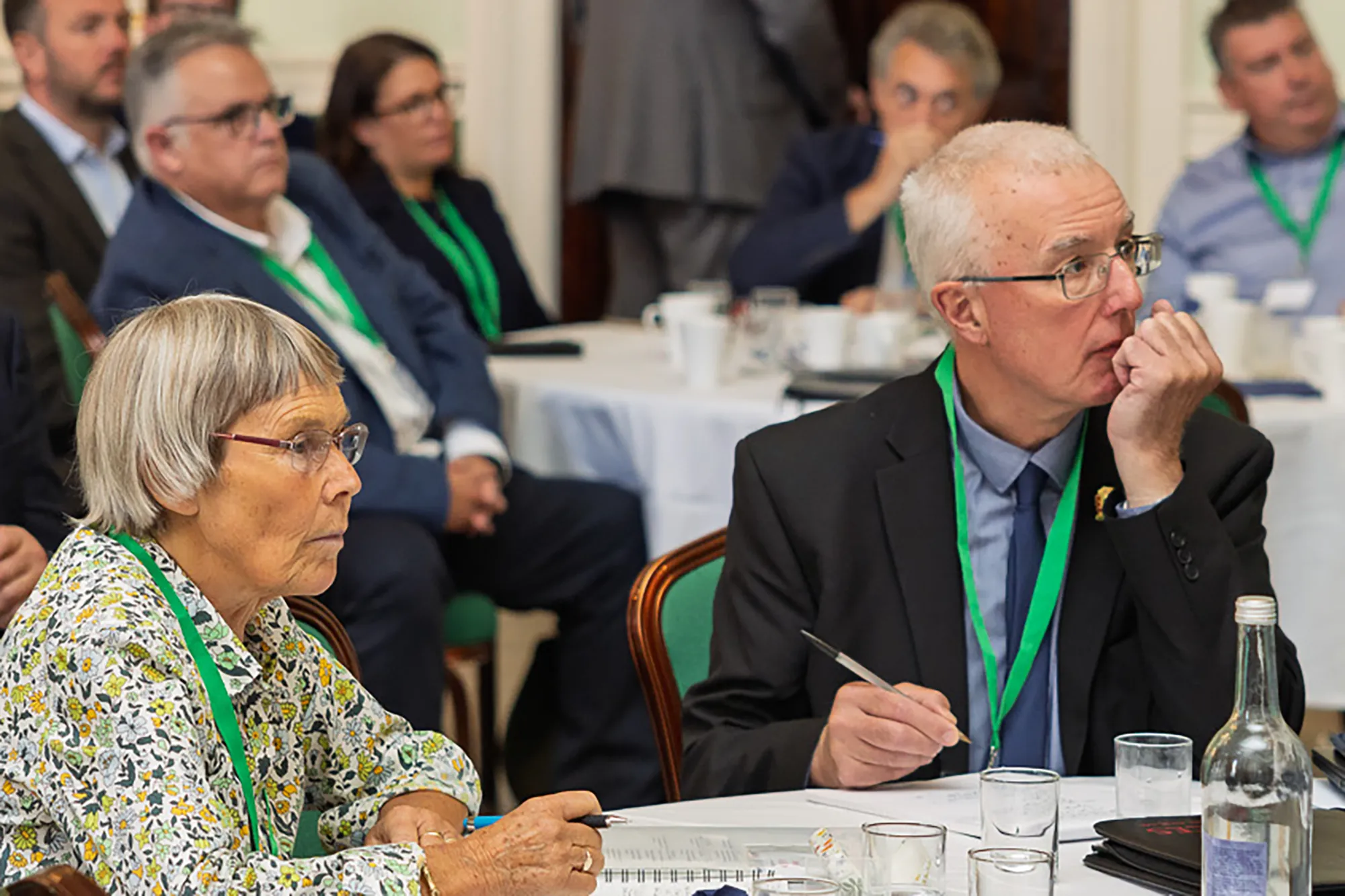
 | Peter is a member of the North West branch of ACES and Past President 2019/20. Betty is ACES Editor, a member of Eastern branch and Past President 2005/06. |
This report is a summary of the presentations made at ACES National Conference held at The Palace Hotel, Southend-on-Sea. More detailed articles of some of the presentations are included in this issue of ACES’ Terrier, with some to follow in Winter Terrier. My sincere thanks to all the help gratefully received from Peter for his major contributions to this summary. |
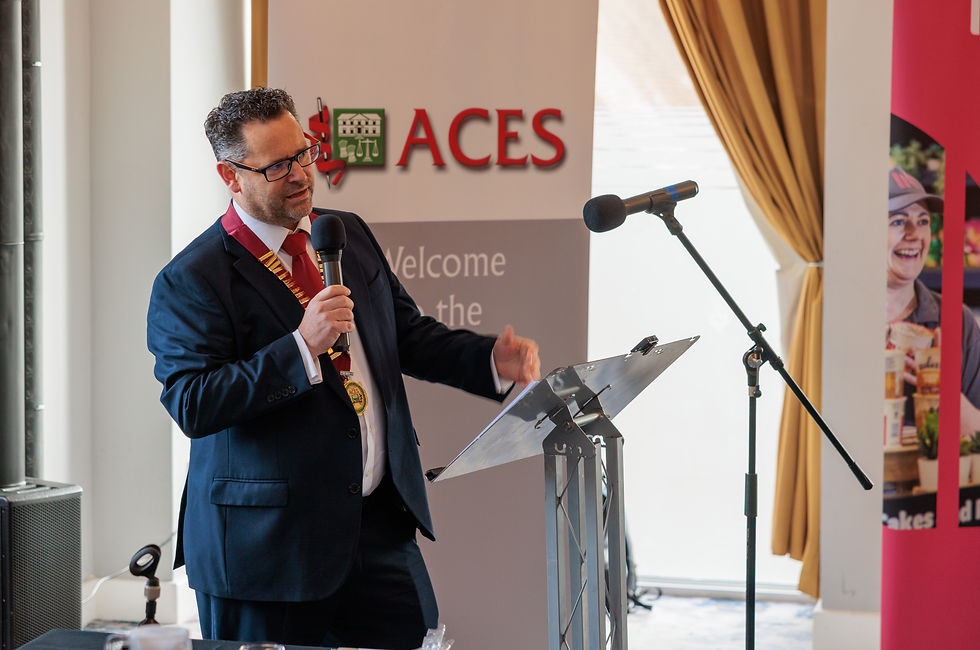
President’s welcome – Alan Richards
 |
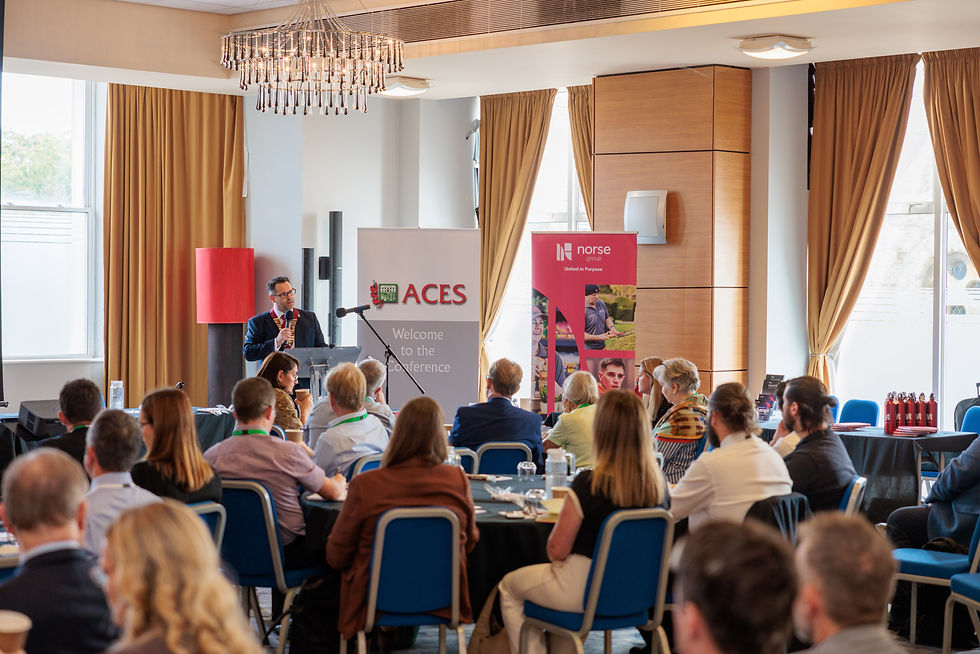 |
Alan welcomed the delegates to a sunny Southend-on-Sea. He hoped delegates and corporate supporters had already had a chance to see what the city had to offer, some of which colleagues would be talking about in the afternoon session.
Alan thanked the ACES’ team in rallying round to ensure the day runs smoothly, and sent his best wishes to Trevor Bishop and David Pethen, ACES’ Secretariat, who could not be here. he also sent sincere thanks to ACES’ loyal corporate members Norse Group, Lambert Smith Hampton, Avison Young, Carter Jonas, and Park Avenue Recruitment, together with conference supporters 31ten, BNP Paribas Real Estate, Purcell, and Concerto.
Alan’s full speech follows this report.
Welcome to Southend – Colin Ansell
Colin Ansell, Chief Executive of Southend-on-Sea City Council, was unable to appear at the conference, having been given short notice of a ministerial visit. Instead, he delivered it to the audience attending the Pre-Conference Dinner at the Roslin Hotel.
It was a real pleasure to welcome guests and thank the association for choosing Southend. He wished us a productive conference and recognised that surveyors were central to creating sustainable communities. He recognised Alan for his leadership, and hoped that by the end of the conference, we had found the answer to fixing local government finance!
Colin’s full speech follows this report.
Housing delivery – Panel session hosted by the Norse Group
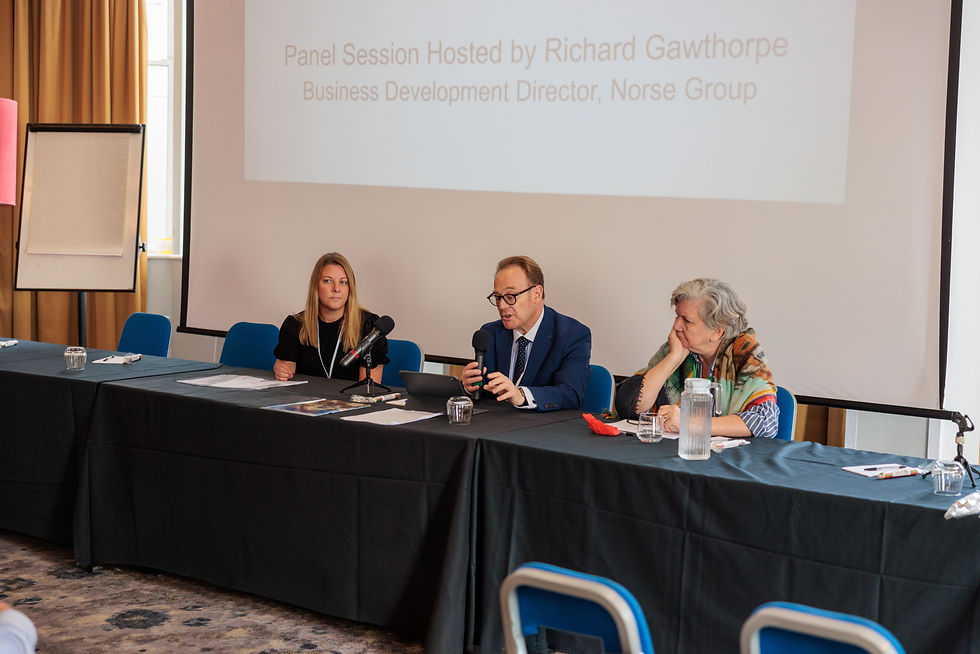
Led by Richard Gawthorpe, Business Development Director at Norse Group, his fellow panelists were Jackie Sadek, Urban Strategy, and Lauren Stretch, Director of Housing at Brentwood Borough Council.
Richard posed the question: “Is the real challenge simply a lack of homes, or has housing become a symptom of wider issues involving finance, asset management, regulation, infrastructure and community resilience?”
To try to answer this, he proposed four themes:
What is really stopping housing delivery?
The cumulative burden on local government: can councils still be strategic?
Housing, assets and place: are we working at the right scale?
What does good look like by 2030?
For theme one, panel members offered that too much was going on. With the ambitious target of 1.5m homes, we are not looking at the people and today’s problems. We need to focus on sustainable places, and refurbishment. There are sufficient long-term empty units to meet a year of that target, together with opportunities to encourage and support “downsizers” through rewards to “right size”. And homelessness needs to be tackled.
It was felt that it was not too strong a view that the country was in a “war-level” housing crisis, largely brought about by curtailing direct housebuilding by councils in the 1970s, when the public sector was consistently building 150,000 p.a.
For theme two, housing, property and place leaders are expected to do an extraordinary number of things simultaneously: deliver housing, improve existing stock, meet net zero commitments, maintain public assets, address homelessness, respond to regulatory change, and all within significant financial constraints. So has the cumulative burden itself become a barrier to delivery?"
This theme ties in closely with the second theme, that with so many calls on council resources, identified by Jackie as “headwinds” to face, this was no way to run the country and stock must be utilised better, using a whole range of delivery models.
This led to theme three, of are we working at the right scale? And equally importantly, through collaboration - between councils, between housing, property, estates, regeneration and planning professionals, the private sector, and Homes England. New models were emerging, such as Build to Rent, and opportunities to involve investors in the end product – was the way forward Public Build to Rent? Only with mending fragmentation can scale be achieved.
Another important factor is establishing long-term partnerships, or “relationships built in the pub” as Lauren put it. There is plenty of energy in the sector to collaborate, to give security and stability to housing delivery.
And finally, what does good look like by 2030? Imagine we're back here at ACES in 2030; what would success actually look like? Is success simply more homes? Or better homes, better assets and stronger communities?
Hopefully devolution should be settled. Clear plans around a Spatial Development Strategy is key; joined up delivery with Homes England and the Regulator, which is independent of changes in governments. This will help de-risk housebuilding and attract institutional investors. Good housing will have knock-on advantages with health, etc.
An article on Public Build to Rent from Jackie Sadek can be found in this issue.
Public private partnerships – Panel session hosted by Lambert Smith Hampton

Led by Dr Steven Norris, Executive Director of LSH, with Neil Parlett, Senior Director at LSH, Nick Langley, Hollybrook Homes, and two ACES members invited to join the panel – Chris Rhodes and Paul Brooks.
The panel of experts discussed perspectives to examine what needs to change to deliver more homes, framed around the topics of barriers to delivery; who should carry risk, and how to close viability gaps; how to keep places at the heart of delivery; partnership working; and the impact of devolution. The question was posed: what would success look like in 10 years’ time? Five practical lessons for all sectors of housing delivery closed the session.
A full transcription of this panel session has been written by Dr. Steven Norris and appears in this issue. The Editor gives heartfelt thanks to Steve for lightening her editorial load.
Keynote speech - Nicholas Maclean, RICS President

The President began his speech by saying that this is one of the most important events he has attended as President. Local government impacts upon the problems faced by our society. He talks to people worldwide and the problems and the solutions are the same everywhere, and can only be solved by collaboration.
The importance of ACES lies in the skill set of its members to deal with these issues, but RICS membership is not growing. Surveying is not considered an attractive career for young people compared with others in eg tech, AI, defence.
RICS has changed direction and has realigned its objectives, targeting three major themes and emphasising the pride of belonging to RICS, and getting the benefits of membership:
Education - RICS is signing off a new educational plan, redesigning its educational programmes, to do something different and to recruit from a wider segment of society
Influence - RICS is aiming for increased influence over government policies; volume needs to be increased in order to lessen the unintended consequences of legislation. That includes collaboration with ACES
Confidence - RICS has lost its confidence – the organisation is not valued by society. Ethical standards are key and will help us to stand out.
Nicholas’ keynote speech is included in full in this issue.
Future workforce recruitment, development and retention - Panel session hosted by Park Avenue Recruitment
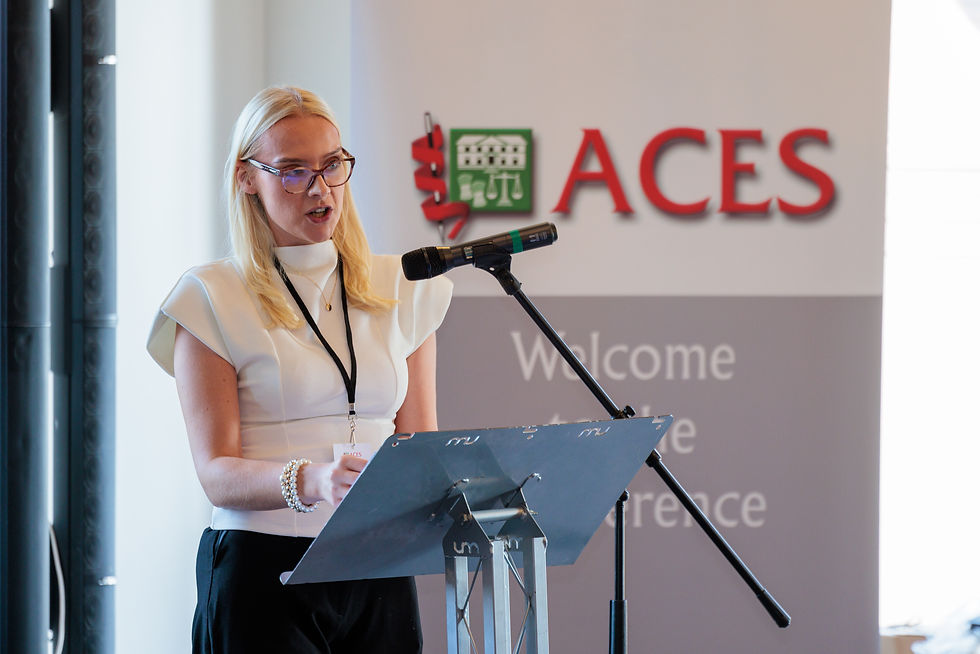 | 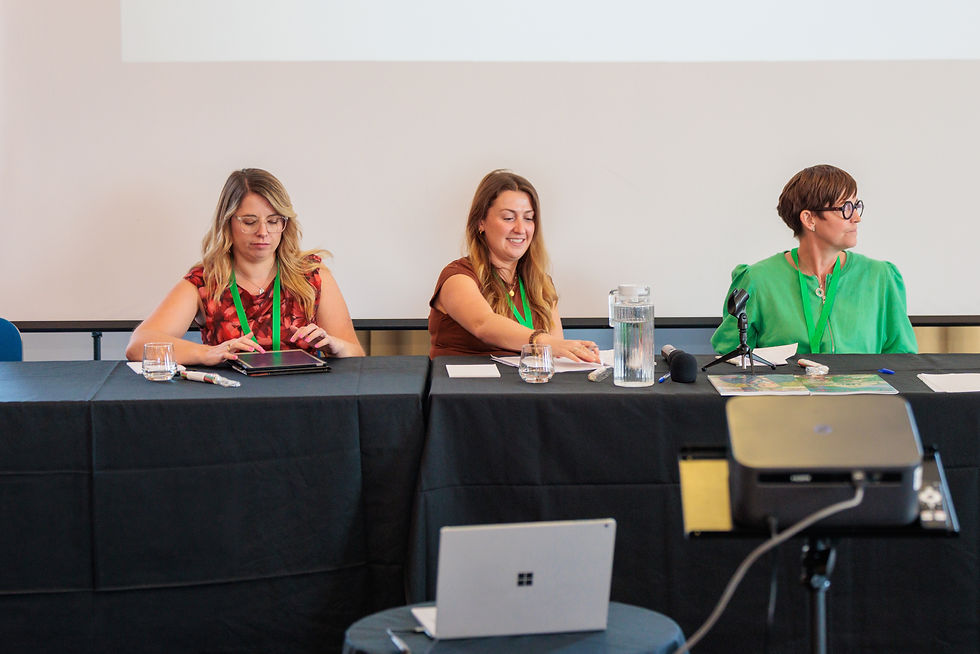 |
The session was kicked off with a mini-keynote by Alicia Greenwood, Senior Executive Consultant, Park Avenue Recruitment; with panel members Sophie Buchwald, Estate Property Manager, Guy’s and St Thomas’ NHS Foundation Trust, and London Branch representative for FACES; Lara Newman, Chief Executive, Common Ground; and Hannah Hammond, Graduate Estates & Commercial Property Surveyor, Suffolk County Council, and branch FACES Coordinator.
Keynote
Alicia was speaking from the perspective of the recruitment market, informed by conversations about peoples’ aspirations. Surveyors find it a challenge to obtain the support and benefits that they need to stay in local government.
Local government needs to make a career visible, helping potential employees to understand how they will grow and what their future holds. Consequently, there is a gap in junior talent that needs to be closed.
Messages:
Attracting – Recruitment is a difficult challenge. How to make local government a job market of choice, showing what candidates will be doing, what will they be learning/how developing, how much will they earn. A clearly visible path is needed, explaining the variety of work, the influence and decision-making responsibilities they will have, the direct impact they will make on communities and people. None of this is currently communicated effectively
Developing – Local government can major on soft skills around building trust and responsibility. The APC can be the defining factor to show off what support new recruits can expect to receive
Retaining – Why do people stay with an employer? The most important factor is a good manager and good colleagues; leadership and team quality
In conclusion, there are lots of talented people around, many who want to meet the challenges of local government. But opportunities are hindered by poor visibility of what is on offer.
Panel session
Alicia posed a series of questions to the panel, to answer from their own perspectives.
Why were you drawn into surveying?
Sophie voiced the extent of skills development, variety of work, career options. The public sector offers diverse and responsible work which authorities could do much more to promote. We should make routes into and benefits of a local government career more visible. Hannah feels recruitment needs modernising, eg job descriptions could be modernised; better hooks eg videos could be used. Lara agreed that there is too much ignorance about what public sector surveying is about.
What is the biggest misconception about careers in local government?
That it is poorly paid, which is not necessarily the case when set against the other benefits of variety, depth, breadth of workload. There is a large number of roles (QS, landlord & tenant, FM, housing) and every day is different; colleagues can make a difference, including adding social value.
What support makes the biggest difference?
The quality of the team is so important, who need to give recruits “real work” and trust, but with support provided when needed. Lara pointed out that this needs to be structured, with a proper grounding: invest time in new recruits and demonstrate to them when they are ready to step up; provide support towards a professional qualification.
What advice would you give to organisations planning to recruit apprentices?
It is important that potential apprentices are shown a route to progress, prospective role development and experience that can be offered. A failing in the public sector is that there are not enough apprentices and numbers need to be increased to create a greater diversity in the cohort.
What factors make you want to stay with an employer?
Important was effective personal development with clear pathways to technical development and salary growth; also transparent and trusting teams. The company culture/social value is important to the younger generation and the public sector is well-placed to deliver.
What would you do to attract, develop and retain staff?
Give them meaningful responsibility and get them involved. Succession planning is important, with routes for junior staff to step up, including with strategic issues.
How would you sell a career in local government surveying?
Hannah emphasised a varied and meaningful workload; unique community impact and making a difference; opportunities for professional development; flexible working terms, and trust.
Sophie offered the development of a broad skill-set and experience; complex and interesting work; and many career entry routes.
Q & A
Is there any correlation between not being in the office and feeling supported?
It was felt that this was a challenge. Rarely meeting in the office means a lot needs to go on when the team is together. Home working requires support and it was recognised that it was easier before Covid. Also, local government resources are a problem, with teams often decimated.
Is the answer to depleted estates teams to create a joint service with another authority?
There was limited experience among the panelists, although it had been suggested. One member of the audience has experienced it – positively.
AI – what is the impact /likely impact on recruitment/employment issues?
Lara thought from experience, it was not good and generates a poor culture. However, Sophie saw pros and cons, particularly to help streamline data finding and processes. Hannah agreed, but thought it helped with job interviews, etc, and was useful to cope with busy times. A member of the audience posed whether the slowness of the public sector to embrace technology was putting jobseekers off? It is probably too early to tell.
Alicia’s mini-keynote speech appears in this issue.
The UK property market: Opportunities, risks and implications for the public sector
 | 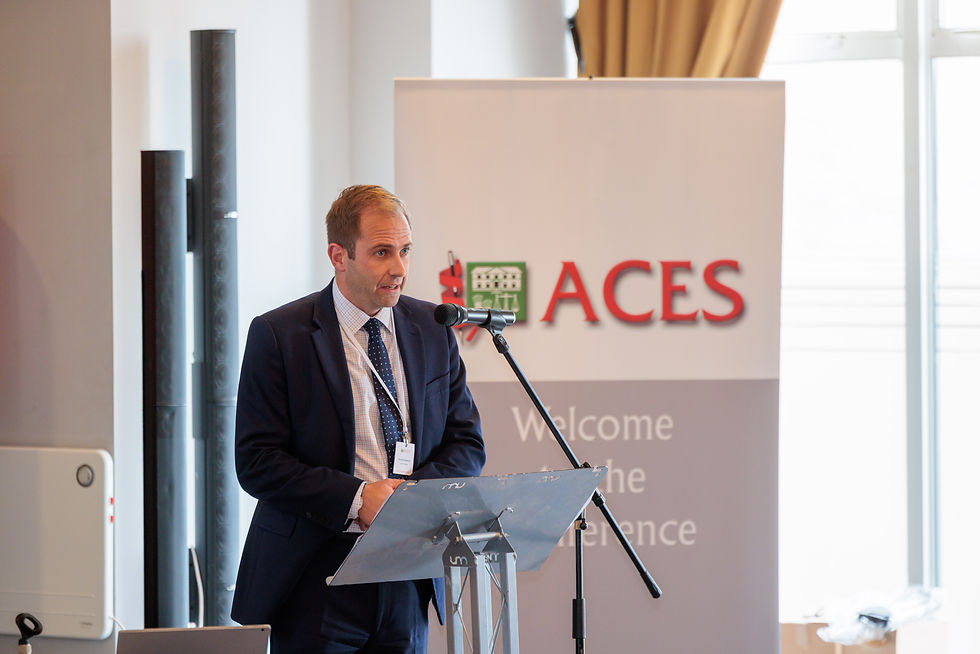 |
The audience received a series of presentations from Carter Jonas - Alexandra Houghton, Head of Commercial, Sophie Davidson, Associate in the research team, and David Johnson, Partner in the valuation team.
The presentations, comprehensively illustrated with graphs, covered the major sectors:
Housing – slow growth, more resilient than expected, but only 400,000 of the 1.5m target of this parliament delivered so far. The target will not be achieved: issues with land assembly and financing and the Renters Rights Act on the rental sector.
Commercial property – the industrial performance gap has narrowed and all sectors are converging; investments remain resilient with transactions stable and there is gradual capital growth. The public sector trends towards disposals at the cost of acquisitions. The market is polarising (MEES) with occupiers’ preference for quality properties. Office owner-occupier numbers are increasing.
Alexandra advised local authorities to be active, but forensic: get good data and have a clear estate plan – know what you want to do with each asset.
Land - rural land values have declined up to 3.2% in the last 12 months, after a long period of growth; the BNG market is still maturing, after 2.5 years. Developers want to acquire BNG units off the shelf, so there is potential for new structures to develop. Local authorities could create or extend habitat banks.
A full transcription of panel session has been written by the Carter Jonas team and appears in this issue. The Editor once again gives heartfelt thanks to Alexandra, Sophie and David for lightening her editorial load
Excellence in the East – Southend Showcase

Four projects were described to the audience, briefly outlined here.
Southend’s Refit Journey – Tim Holland
Tim is Head of Housing at Southend-on-Sea City Council. The Council has 6,000 homes, 1,400 of them sheltered accommodation – in a mix of styles. Managed by an Arm’s Length Management Organisation since 2006.
1,662 homes have an EPC of “D” or below. An action plan was implemented, involving modelling software; a retrofit show-home to demonstrate what was possible (completed December 2023); external wall insulation, new windows, ventilation improvements, cavity wall insulation, ground source heat pumps. The scheme received an Essex Housing award in 2025.
MEES - the council is aiming for EPC “C” rating for social homes. To date, data has improved, funding has been obtained, and solar and battery installation is included. The biggest challenge with MEES is funding to complete the retrofit.
Airport Business Park - Harry Bunbury
Harry Bunbury is a Director at HBD, the development subsidiary of Henry Boot plc. HBD is Southend-on-Sea City Council’s development partner. The Airport Business Park project aimed to bring forward a greenfield site for the development of 30,000 sq ft of employment space.
Lessons learnt are the importance of partnership, which demands patience and understanding. The local authority can bring in funding, eg through Local Enterprise Partnerships; HBD can produce quality development.
The key to a successful partnership is managing risk – eg planning, profitability, funding, infrastructure investment, understanding financial obligations. De-risked opportunities will always appeal to prospective partners. Also, partnerships evolve and need to get on and accept twists and turns; public procurement needs to be well-handled.
Better Queensway – Glyn Hawksworth
Glyn is the Director of Regeneration, Housing & Regulatory Services at Southend-on-Sea City Council. This is a long-term, complex project, requiring strong resilient partnerships. The project looks at how housing sits within place/context, not just about delivering an asset.
The context is that city centre buildings and major highways are no longer fit for purpose, with inefficient land use. The neighbourhood around the city centre needed to be revitalised, and the council’s aspiration is to build housing stock, but it needed to look carefully at how it is generated.
The problem was a site divided by a major highway (Queensway), causing community severance. Major highway works are required to reduce its impact on the community and to unlock additional development land. These are still under way.
Lessons learnt – address constraints first; create certainty for partners and funders; use infrastructure to connect communities; integrate highways/housing/place-making goals; create a compelling vision; the importance of partnership; and plan works that can unlock further development land.
There is no simple metric to measuring success: the project is driven by development need. Finance is important, place making is vital, but difficult to quantify or measure by KPIs.
City Jam – Aida Esposito
Aida is Director of Culture, Leisure, Music and Tourism at Southend‑on‑Sea City Council. City Jam is an annual street arts festival – one of Europe’s largest. The festival is about giving people permission to look at things differently, by turning places into destinations and enabling communities to recover parts of the city.
The festival produces a permanent, growing, external art gallery – photo opportunities, walking routes, landmarks – which creates a cultural asset, rooted in Southend, characterised by authenticity and driven by the artists.
This year’s festival attracted 324,000 people, spending £6m. It encourages dwell-time and produces positive relationships and connections with place, and enables Southend to compete with other areas for visitors.
An additional report on these projects will be presented in the next issue of ACES Terrier.
Harry has also written a thought piece on successful development partnerships which appears in this issue.
Local Government Reorganisation
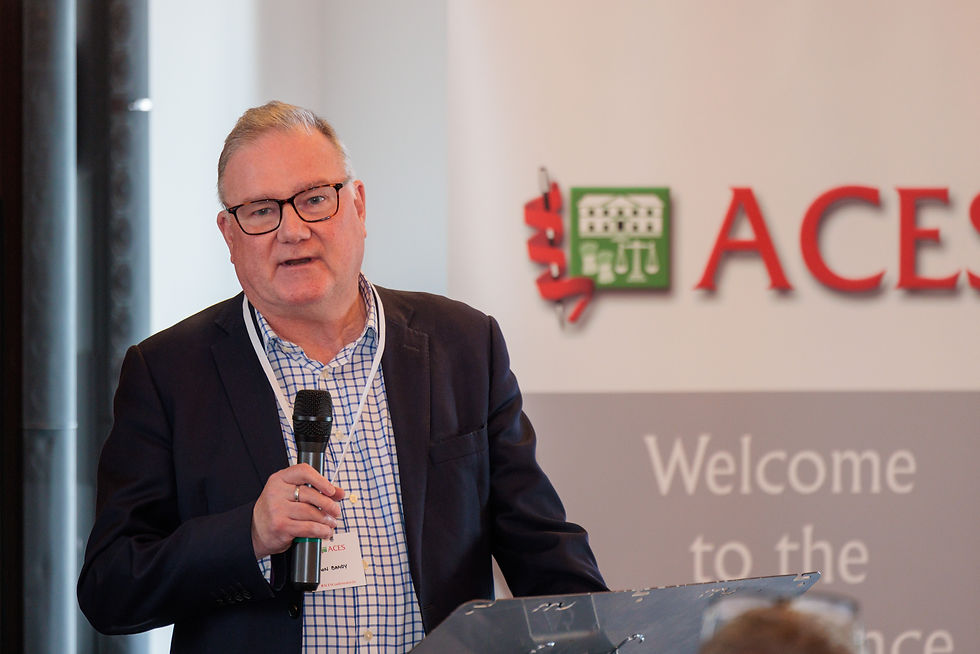
Simon Bandy is a Senior Director at Local Partnerships, working in the LGR and Transformation team.
Simon posed this question to the audience - where does property sit? – is it a central or peripheral service? The answers will determine how much influence/profile property can have over LGR.
He sees assets as central to LGR and successful transformation. The continuity of assets is essential to the continuity of services. Assets must be safe and legal, and compliant with statute. The operational model/asset availability determines how and where services are delivered. They are required for transformation – LGR is intended to deliver better services – cost savings, service improvements, improved outcomes, all of which require property to determine those benefits.
The practical challenges for property teams are:
Data –May be incomplete, inconsistent and out of date. Across authorities it may be on different systems and in different formats. Poor data = poor decisions
Decision-making constraints – Continuity is important and officers need to understand what decisions are required and how they are to be made during the transition period. Those decisions relate to retain, demolish, dispose, hold. Asset requirements will depend upon the new operating model
Scale and complexity – Involving multiple local authorities, there are thousands of assets of different types, each of which is unique and all of which need to be understood
Aggregation/Disaggregation –Different records and functions will need to be reconciled, as will any changes to housing or regeneration objectives. There may be difficulties of consistency and clarity around rules and procedures
Capacity – Risk-based prioritisation is needed, along with clear categorisation of assets.
The role of property professionals will depend on whether they lead or respond. Both roles will apply in different situations. Lead in order to ensure estate safety, produce and safeguard asset data, generate rationalisation, and value for money opportunities; respond to service models, political/community priorities, transformation decisions.
Some pointers:
Property issues need to be integrated with the Implementation Board and key decision-making forums
Transparency is vital: identify issues early, put risks on the table and avoid surprises later
Property teams should build relationships across finance, legal, HR, ICT, service transformation, customer access, communities and place
The workstream needs clear ownership, documented assumptions, agreed escalation routes and visible links to the wider LGR programme.
Local Partnerships can help in many ways and Simon advised delegates to see the LP website for tools, as well as providing consultancy support. These include:
Support councils to understand the property implications of LGR and prepare for transition
Provide practical tools, templates and checklists to structure asset workstreams
Help councils develop prioritisation approaches, decision frameworks and safe and legal assurance
Support engagement between property, programme leadership and other workstreams
Share learning from work with councils and partners, including tools supported by the LGA.
The key messages of the LGR process:
Be visible early: ensure property is represented in core LGR governance
Focus first on safe and legal continuity, then on transformation opportunity
Use data pragmatically: identify what is known, what is missing and what matters most
Frame decisions clearly: retain, hold or dispose — and decide when each decision should be made
Work across boundaries: property success depends on finance, legal, services, people, ICT and place
Keep benefit realisation in view: the estate can help prove that LGR was worth the effort.
Looking after the profession
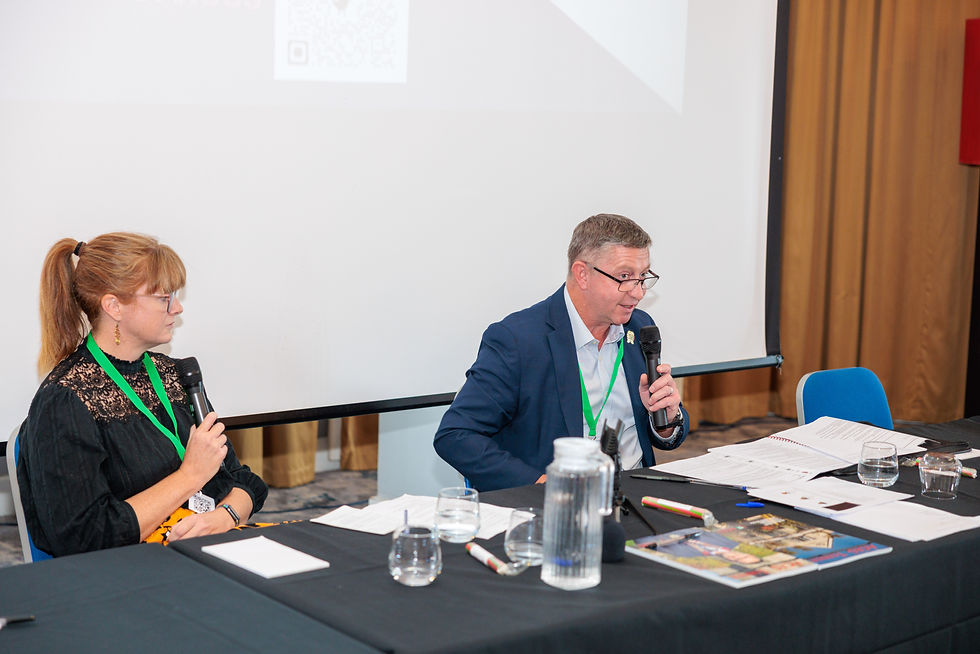
This was a session designed to emphasise the importance of being forthright about our wellbeing and that of our colleagues; it was a ‘Fireside chat’ conducted by Philippa Bancroft, Senior Manager, Public Land, Land & Development, Greater London Authority and Chair of LionHeart, with Dan Meek, Director of Estates & Valuation at South West Norse, Exeter and Immediate Past President of ACES.
Dan kicked off to comment on the longstanding relationship between ACES and RICS; drawing on the Public Sector Forum and the recognition of the public sector forming a significant part of the RICS membership.
Dan posed the question that LionHeart is the charity for RICS surveyors and their families – what is it and who does it support? Lionheart is a traditional benevolent fund separate from the RICS, but expanded to support surveyors and their dependents throughout their entire careers and beyond. It offers grants and counselling on a broad range of life and professional matters. Some of the key challenges that surveyors come to you with can start as requests for information, but may turn into stress counselling. While women were previously more willing to ask, more men are now responding and recognising they might need help.
Philippa asked Dan what impact did he think LGR is/was having on staff in the workplace? Undoubtedly it has increased workloads, which has increased stress. While LGR is on hold, it has not gone away. However, from a property management perspective, LGR has also raised opportunities to staff, by putting them more central to the challenges.
Much good work is being undertaken, so don’t pause this element. Leaders need to support their teams to recognise mental health risks associated with the pressures and now uncertainty. Staff may become isolated with home working, so it is important to pick up issues and pressure points on colleagues and friends. The Norse Group is well placed, as it has mental health-trained colleagues.
One way colleagues can support each other is to get away! Unashamedly, there was a plug to get involved in the Public Sector Challenge, which promotes good health and wellbeing, while raising money for national charities.
Equally, delegates can get involved with the Lionheart community. Donations have fallen since the RICS website changed, so please donate, and use social media to promote Lionheart and its whole range of services.
Closing remarks
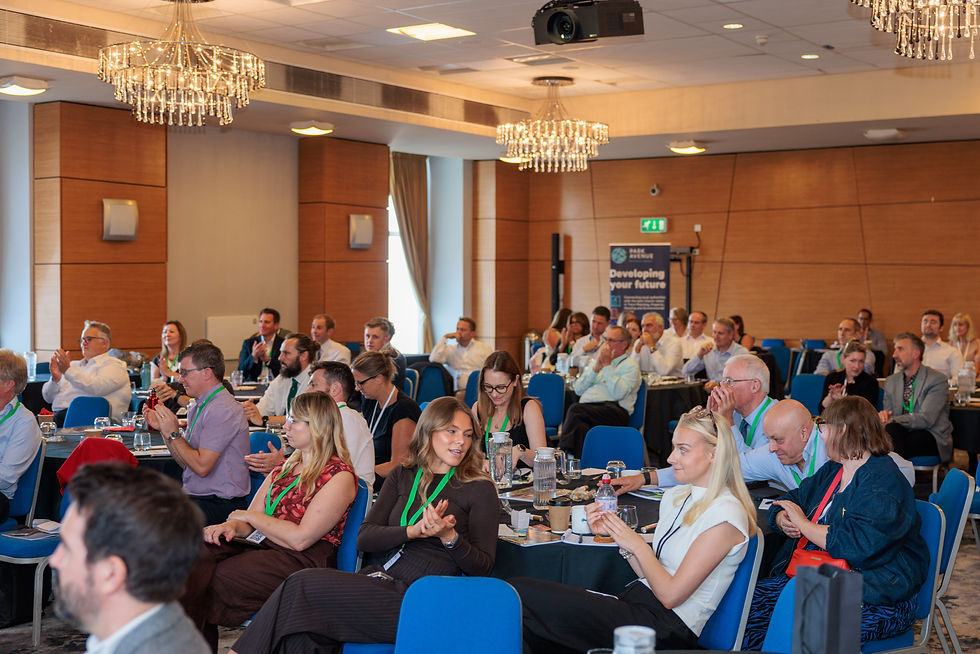 | 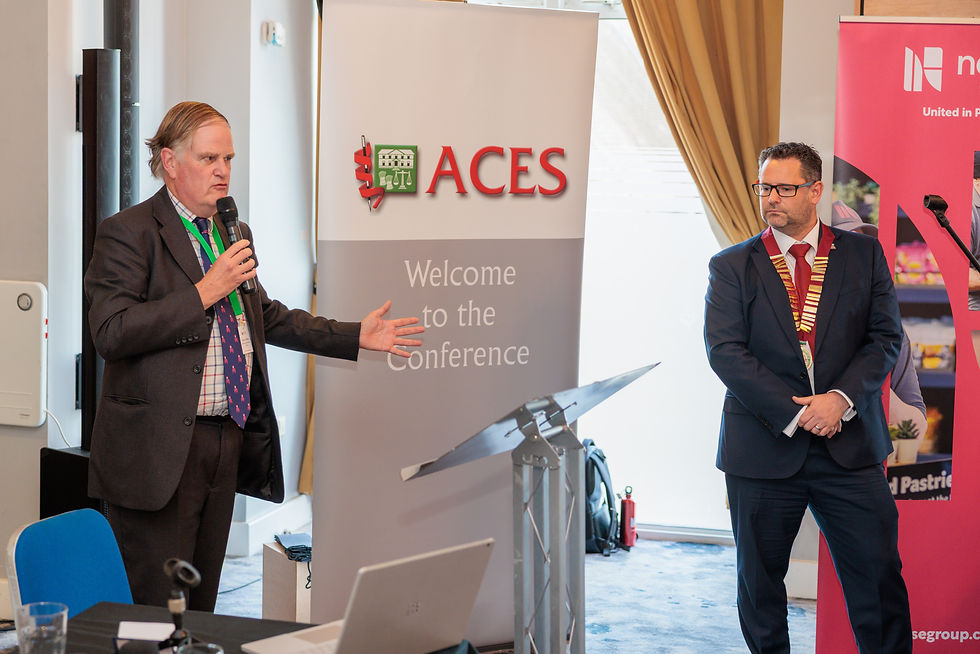 |
Alan Richards and Andrew Stirling, Head of Resources, Shropshire Fire & Rescue Service and ACES Senior Vice President.
Alan closed with remarking that it had been a fascinating day. He again gave his sincere thanks to the ACES team members who had all pulled together to put on this conference; our loyal corporate members: Norse Group, Lambert Smith Hampton, Avison Young, Carter Jonas, and Park Avenue Recruitment, who make events such as this possible, and also our conference supporters: 31ten, BNP Paribas Real Estate, Purcell, and Concerto; and to Marcus and Mark for their recording activities.
Andrew took this opportunity both to thank Alan for coordinating an excellent conference, and gave brief details of ACES National Conference 2027. It will be held in Shrewsbury on 6/7 October.
Delegates were wished a safe journey home.


Comments