
BIODIVERSITY NET GAIN Unlocking biodiversity value: Turning estates into assets through BNG

 | Shashin is Senior Vice President of BNGAI™ at AiDASH. He leads the development of BNGAI™, an end-to-end biodiversity net gain management platform that combines satellite data and AI to support developers, ecologists, and local authorities. With more than 20 years’ experience in technology and infrastructure, Shashin works closely with public sector partners to design practical solutions for compliance, governance, and long-term land management. BNGAI™ by AiDASH is already being used across the UK to deliver transparent baselining, monitoring, and reporting, helping councils and estates teams turn the challenge of BNG into an opportunity for both revenue and environmental resilience. |
BNG has introduced a new dimension to how public estates are valued and managed. While the policy brings fresh challenges for local authorities and surveyors — from governance and liability, to evidence and long-term monitoring — it also opens a unique opportunity to reframe land as a financial and environmental asset. Surplus or under-utilised holdings can be transformed into habitat banks, generating biodiversity units that support local development and deliver new revenue streams; it represents not only a statutory duty, but also a chance to shape resilient landscapes for the future. |
Context and background
Biodiversity Net Gain (BNG), introduced under the Environment Act 2021, is one of the most significant changes to the planning system in a generation. From 2024 onwards, all qualifying developments must deliver at least a 10% uplift in biodiversity, measured through a standardised Defra metric and secured for a minimum of 30 years.
The policy is a response to alarming statistics. The 2023 ‘State of Nature’ report confirmed that the UK is one of the most nature-depleted countries in the world, with 1 in 6 species (16%) at risk of extinction. Habitats have become fragmented and degraded, with public authorities often left carrying the costs of decline without clear mechanisms to restore value.
BNG represents a new baseline: every development must not only compensate for loss, but contribute positively to the environment. For public sector bodies, this creates both responsibility and opportunity. Local authorities, NHS trusts, emergency services, and other estate managers control thousands of hectares of land. Historically, these holdings were seen mainly in terms of development potential, or as liabilities incurring maintenance costs. Under BNG, the same land can now generate measurable biodiversity units, providing income streams and supporting planning compliance.

Local Nature Recovery Strategies (LNRS) add further weight. Units created on land identified as strategically significant in an LNRS score higher in the metric, increasing their value. In practice, this means land that might once have been overlooked — buffer zones, marginal farmland, disused estates — can become some of the most valuable assets in a local authority’s portfolio.
As Steve Quartermain CBE, former Chief Planner for England, observes: “BNG gives planners something powerful: a framework for positive environmental change. The opportunity now is to use it well — to deliver development that enhances the natural world, supports resilient places, and earns public trust.”
Challenges for public sector estates teams
The opportunity is clear, but so are the challenges.
The biodiversity metric is highly technical. While many councils employ ecologists, the numbers are limited, and the burden often falls on estates surveyors and property managers to interpret reports, validate submissions, and decide whether proposals meet statutory requirements. Surveyors must therefore bridge two worlds: ecological complexity on the one hand, and financial/estate management on the other.
Resource constraints make this harder. Councils are already stretched with day-to-day estate management. Reviewing dozens or even hundreds of BNG submissions annually requires time, expertise, and consistent processes.

Long-term stewardship is another challenge. Every biodiversity unit must be maintained and monitored for 30 years. This raises questions around liability, governance, and budget certainty. Who takes responsibility for delivery? How is monitoring funded year after year? How can public benefit be guaranteed when private investors are involved?
These questions were at the forefront of a recent report produced by AiDASH, where public sector leaders reflected on the implications of long-term BNG delivery. “Local authorities need to be properly resourced — with the capacity to deliver BNG projects through to completion and commit to their long-term stewardship,” (Krista Patrick, Natural Capital and Sustainability Manager at Greater Manchester Combined Authority).
Belinda Gordon of the Landscape Institute adds that multi-disciplinary input is vital: “Bringing in landscape professionals helps LPAs take a more strategic approach — focusing resources where they’ll have the most ecological and community benefit.”
Turning obligation into opportunity: estates as habitat banks
Despite these challenges, BNG reframes public land as a new kind of asset. Surplus, marginal, or under-utilised land can be managed as habitat banks, generating biodiversity units that developers purchase as off-site credits.
This model has immediate advantages:
It turns liabilities (such as brownfield or low-productivity land) into revenue streams
It reduces long-term maintenance costs by securing external funding for land management
It strengthens planning confidence by ensuring biodiversity units are delivered locally.
Natural England’s early case studies show councils already moving in this direction, restoring grasslands, wetlands, and woodlands to bank biodiversity units. These banks are then registered on the national Biodiversity Gain Site Register, providing transparency and confidence for the market.

Nick White, Principal Adviser for Net Gain at Natural England, highlights the scale of this opportunity: “There’s a clear opportunity for BNG to generate wealth locally — not only through enhanced natural capital, but as a long-term financial asset for local government.”
Governance and delivery models
For this potential to be realised, governance is key. Biodiversity units may now be treated as an asset class, but without credible delivery structures they risk being undermined.
Public bodies are exploring several models:
Wholly-owned council companies — giving the authority full control but also full responsibility
Joint ventures with developers or conservation charities — spreading risk while sharing revenue
Regional consortia — pooling land across multiple authorities to reach economies of scale.
Each has strengths, but all require clear contracts and ring-fenced funding. Units must be backed by evidence, monitoring protocols, and long-term governance if they are to retain value. Revenue from biodiversity is only as strong as the governance behind it. Without transparency and trust, units risk becoming paper promises rather than real value. “Certainty around demand is essential. If you’re investing in new delivery vehicles or habitat sites, you need confidence that units will be purchased.” (Krista Patrick).
Evidence, efficiency, and what makes a unit valuable
Reliable baseline data is the foundation of the entire system. Without clear baselines, biodiversity units cannot be validated, values are uncertain, and disputes are likely. Natural England emphasises that robust, transparent, and repeatable methodologies are essential.
Technology is beginning to ease the burden. Satellite imagery, AI analysis, and remote sensing now allow estates teams to baseline large areas quickly, producing metric-compliant evidence at scale. This is especially important for councils reviewing dozens of applications annually or managing multiple habitat bank sites.

Platforms such as BNGAI™ by AiDASH are already being used by local authorities and developers to support this process — providing consistent baselines, transparent monitoring, and long-term evidence trails that can be relied upon for 30-year stewardship commitments. For estate managers with limited in-house ecology capacity, these tools reduce risk, while giving confidence in both compliance and revenue forecasts.
But evidence alone does not determine value. The market is already demonstrating that certain factors increase the price of biodiversity units:
Strategic location: units within LNRS priority areas are more valuable
Habitat distinctiveness: high-value habitats (wetlands, species-rich grasslands, ancient woodland) command premium prices
Assured stewardship: units backed by clear 30-year management plans and monitoring protocols build confidence
Registry status: credits recorded on the national register are trusted more than unlisted sites.
Pricing data shows the scale of opportunity. In 2024, Biodiversity Units UK reported:
Neutral grassland in southern England trading at £28,875 per unit
Lakes and ponds (non-priority habitat) averaging £65,625 per unit.
High-distinctiveness habitats reaching up to £650,000 per unit.
These ranges demonstrate why councils should prioritise strategic alignment and habitat quality in their estate planning. Poorly located or low-distinctiveness units may find buyers, but high-quality, LNRS-aligned sites can transform public balance sheets.
Long-term estate strategy and wider benefits
BNG is fundamentally long-term. Units must be secured for 30 years, meaning decisions made today will shape estate management for a generation.
For early adopters, the benefits are clear:
They can select the most strategically valuable land
They can set the terms of local biodiversity markets
They can secure long-term income streams that fund estate management and reduce reliance on annual budgets.
BNG is, in effect, a 30-year contract with nature. Councils that step forward now will be the ones writing the rules, not just following them.
The benefits extend beyond finance. Improved habitats provide community wellbeing gains, health benefits, and climate resilience. Access to restored green space supports public health strategies, reduces urban heat impacts, and contributes to flood mitigation. “BNG was always intended not just to support nature recovery, but to strengthen people’s contact with the natural environment — recognising the broader social and wellbeing benefits that come with it.” (Nick White)
Benefits for the public sector
When approached strategically, BNG delivers a package of benefits:
Financial: stable, predictable revenue through habitat banks and biodiversity credits. “BNG has the potential to deliver stable, long-term income — and that includes opportunities for local governments who act as landowners” (Nick White)
Strategic: improved planning certainty and stronger local compliance
Environmental: delivery of LNRS targets, improved habitats, and measurable nature recovery
Reputational: councils demonstrating leadership in sustainability, stewardship, and innovation
Social: enhanced access to nature, community wellbeing, and resilience to climate impacts.
Conclusion
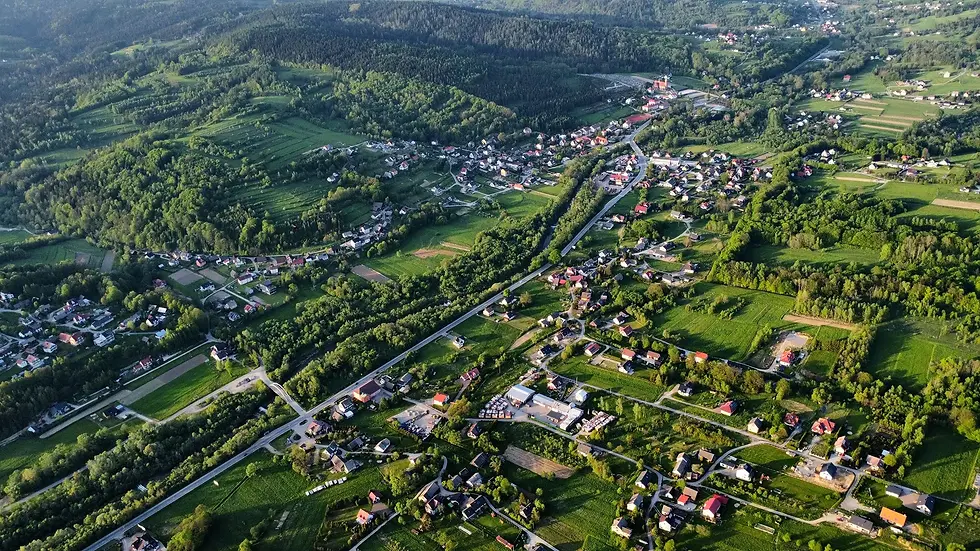
Biodiversity Net Gain is more than a regulatory requirement. It is a generational opportunity to rethink how public land is valued, managed, and financed. By combining ecological evidence, financial governance, and long-term planning, public sector estates can transform green space, from a cost centre into a cornerstone of compliance, community wellbeing, and revenue generation.
Steve Quartermain summarises it well: “If you want BNG to succeed, get the leaders on board — it’s about the financial and social benefits just as much as the environmental ones.”
With proactive steps today, surveyors and asset managers can secure not only new income streams, but also a legacy of restored and resilient landscapes for the communities they serve. Platforms such as BNGAI™ by AiDASH can support this journey, providing the transparent evidence and long-term monitoring needed to turn ambition into reliable delivery.
With proactive steps today, surveyors and asset managers can secure not only new income streams, but also a legacy of restored and resilient landscapes for the communities they serve.
References
UK Government. (2021). Environment Act 2021, Schedule 14
Natural England. (2024). Biodiversity Net Gain guidance and resources.
Biodiversity Units UK. (2024). BNG Pricing Report, July 2024
National Audit Office. (2024). Risks to the long-term effectiveness of the new biodiversity net gain scheme
Wildlife and Countryside Link. (2023). BNG can be more than a glorified offsetting scheme
AiDASH. (2025). Revenue Strategies for Local Planning Authorities: Unlocking Revenue from Biodiversity Net Gain.


Comments