
DEVELOPMENT PARTNERSHIPS The value of partnerships
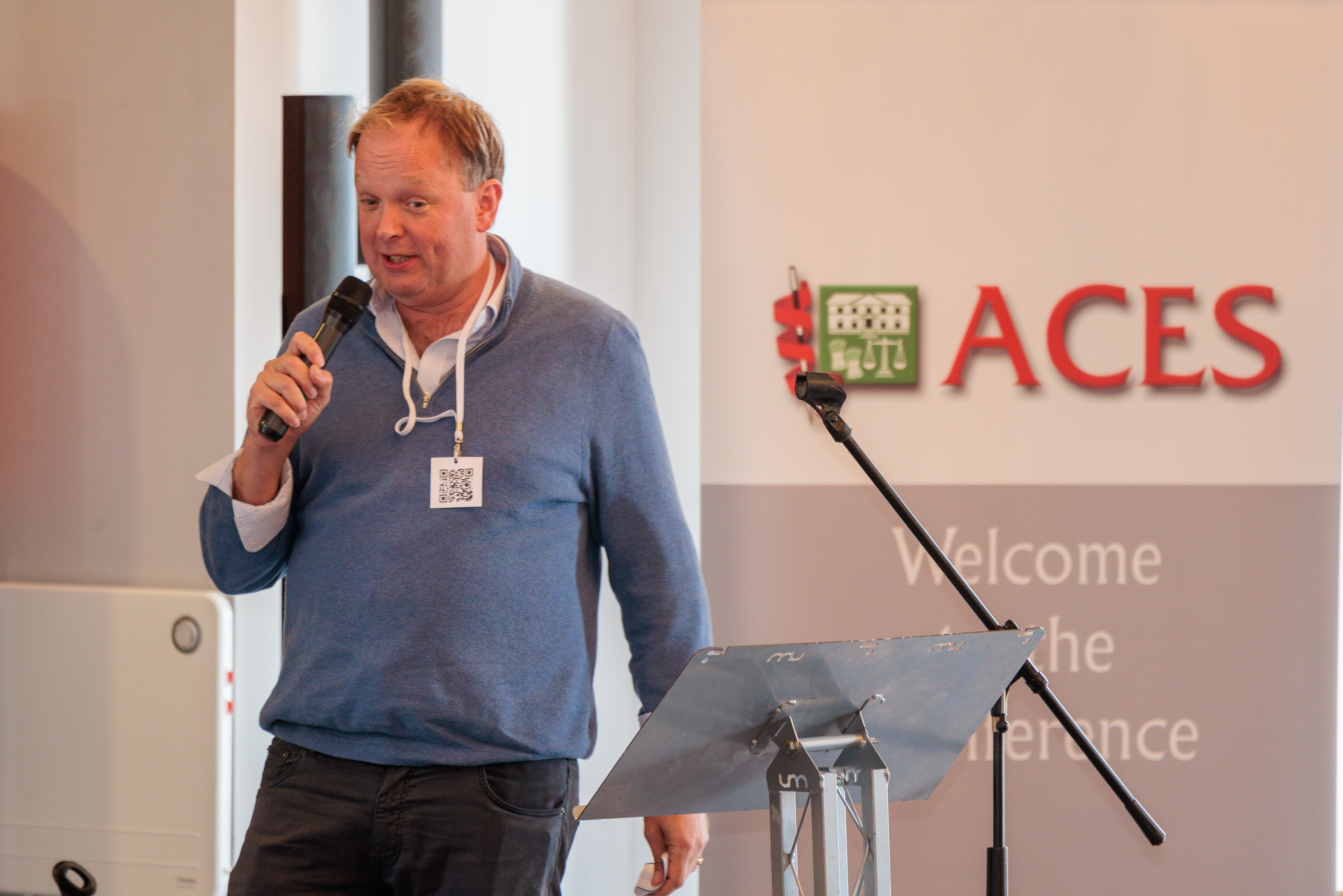
 | Harry is a Director at HBD, the development subsidiary of Henry Boot plc, a Sheffield-headquartered company listed on the London Stock Exchange. HBD operates nationally from six offices and currently has a development pipeline valued at approximately £1.3bn. The business delivers many of its projects through genuine partnerships with both public and private landowners, with a strategic focus on its core markets of industrial and logistics and urban regeneration. Harry has led HBD’s partnership with Southend-on-Sea City Council for the past 10 years, overseeing the delivery of Airport Business Park, Southend (www.abpsouthend.co.uk ). The project is bringing new economic activity and employment opportunities to the wider Southend and Rochford area. |
Harry provides some further insights around the value and importance of partnerships to those first presented at the recent ACES National Conference in Southend on 24 September. |
We here at HBD were immensely grateful to be invited by the ACES President to both showcase our joint project Airport Business Park, Southend (ABPS) at the recent ACES National Conference and to have the opportunity to listen first hand to the range of challenges experienced by public sector property teams.
Commonalities
I came away from the conference concluding that while we have different governance, accountability and resourcing challenges, private and public property professionals also have much in common. We all believe in the built environment’s capacity to deliver places where people can live, work and play. We are all working towards a common goal of first-class place making, while also deriving value, whether that be financial, social or economic, to the assets we are working on. To do that, we all have to take measured and controlled risk; as part of taking that risk we can use a partnership approach, either via a development agreement or a joint venture to share that basket of risk.
The other thing we all have in common as property professionals is what was once known as ‘bulging in-tray’ but now modernised to a ‘bulging inbox’. My suspicion is that with resourcing challenges within local authorities, where I heard that recruitment campaigns are hampered by capital constraints, the constant stakeholder engagement with many more touch points than we have in the private sector, that is even more felt. This provides an opportunity though - and that opportunity is to allow us across the development world to help and do the heavy lifting on your behalf.

HBD embraces partnership working, we revel in it. Additional to our friends at Southend-on-Sea City Council (where we even managed to endure a presentation mishap which those who attended conference will know), we are also working with Luton Borough Council, London Borough of Enfield, Derbyshire County Council, Cheltenham Borough Council, in addition to a cluster of exciting institutional landowner names including two Cambridge University, colleges.
Every single one of our partnerships is unique and each has a different structure. In each instance we are working either on delivering an urban regeneration scheme such as our Golden Valley project in Cheltenham, or industrial and logistics, like ABPS. Increasingly as markets are becoming more demanding, we are tackling innovation opportunities, like our Duxford Aviation Technology Campus scheme in South Cambridgeshire.
Each project has different interpretations as to what success is, but all are built on common foundations of trust, respect and clear reporting lines normally, based around an agreed business plan, regularly updated. ABPS has been built on these solid foundations.
A two-tier approach
Agreement is reached via a two-tier approach to governance. Tier 1 is an ‘operational project doing level’ manned by our development professionals who are in constant dialogue with partnership colleagues. Tier 2 is the executive board level, which is manned by senior professionals who meet on a quarterly basis and provide the platform for making decisions and hold the project team accountable.
Success of the project starts from the first moment, with the long and winding road of public procurement providing the starting gun. We get the necessity for the transparency and the need for an even playing field.
We applaud it, we have even invested in it via the Pagabo Procurement Platform. That procurement journey often provides us with the chance to measure for the right projects that deliver on our strategic objectives for a manageable amount of risk, and that we have the right chemistry with those on the other side that it is a project we want to work on. We do after all work with our partners in the same manner that we would work with our own colleagues.

Patience
For all the importance of a successful set up and a willingness to go about the project in the right way, the added ingredient is patience. Patience in the sense that ultimately all real estate, and certainly in industrial and logistics, is made possible by an occupier client needing somewhere where it can do; whether that be manufacturing widgets, or store and then deliver life’s necessities to the ever-demanding consumer.
In today’s complex world, occupiers need time to make decisions, but decision making is easier if they know that there is a reliable partnership behind the project that is able to bring conceptual ideas to reality. We all know of a scheme that talks a good game, but for whatever reason has never materialised.
The second part of patience is that there is a great deal for us, as developer, to do to make commercial development possible. The moment you are through procurement, there are planning obligations, including engagement with the neighbours to the project, all of whom will naturally have their concern about development in their ‘back yard’. Once we are through planning there is the infrastructure design, funding and delivery to consider, including the challenges of utilities and more specifically, the distribution of utilities - and particularly power - something of a scarce commodity in the UK at present.
With all of that done (which can be up to five years from incorporation of the partnership), we can really begin to say to the occupier community that we can reliably deliver real estate for their businesses. It is at that that point the economic, financial and social benefits for the partners begin to materialise.
None of this is possible without expert consultants, whether they be sustainability, architectural, engineering, local agents with their local market knowledge, or national agents, who can open up the site to the national or international occupier world, including possible funding partners. We at HBD have over our 135 years plus in the business and have built reliable, stable working relationships with these experts, all of whom are at the top of their game, and with an ever busy sector, subject to the status of macroeconomic headwinds, as busy as the rest of us. Our relationships get our partners’ projects their place in the queue at a competitive professional fee request.
Airport Business Park has been an exemplary example of how partnerships can bring success. Working together, staff at HBD and officers at Southend-on-Sea City Council are delivering on what the very reason why the UK has the NPPF, which is (among many other things) there to stimulate economic activity for the benefit of UK Plc. Everyone is winning from it, and it make sense to us, as we all strive for growth, that there should be more of it, so we say keep your procurement colleagues busy with more real estate projects.
Partner comments
Alan Richards, ACES President and Southend-on-Sea’s’ Executive Director for Environment and Place, reiterated the value of the partnership. “Having been involved in Airport Business Park, Southend from its conception and throughout the partnership with HBD, the benefits of being able to draw on each partner’s strengths to achieve success is very obvious. The council’s land has been transformed and our ambitions realised driving inward investment, job creation both in construction and occupation, and creating a place of which both partners, and now our many occupiers, are proud.
We look forward to working with HBD through to the completion of development, and hope the experiences we have amassed through this partnership work to the benefit of future partnerships for both partners. Put simply, neither party could have done it alone, but together we are creating something great.”


Comments