
MY LEGACY What has happened to my legacy – Addendum Community Asset Transfer: Is it a policy inherently destined to fail?

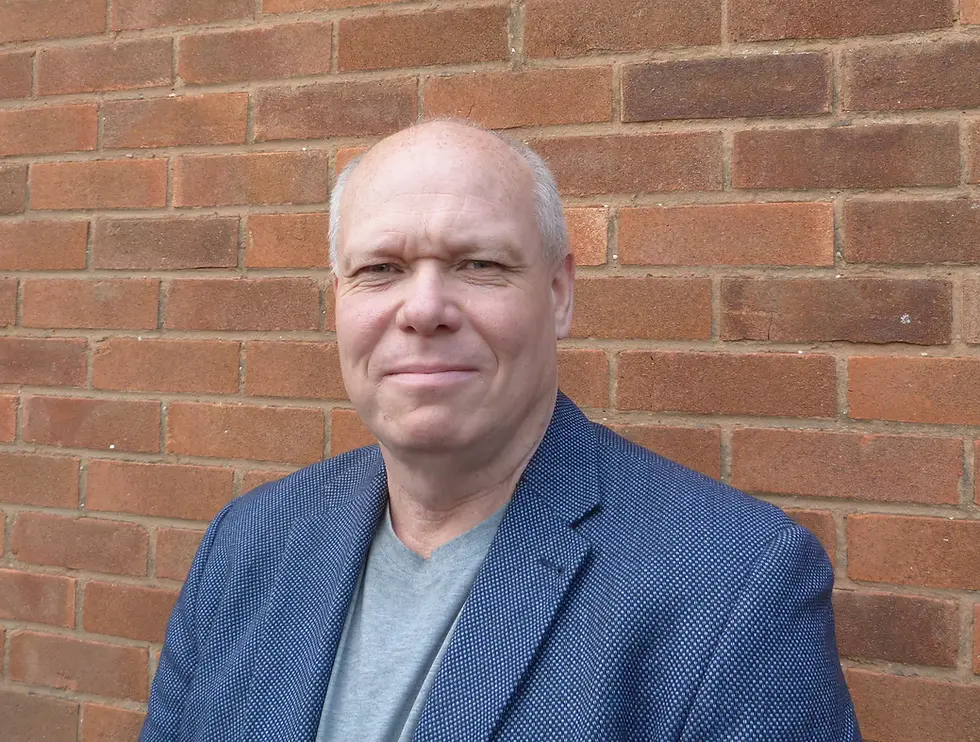
 | Richard is an honorary member of ACES who was President in 2004/05, a member of ACES Council for a number of years, and a stalwart of Heart of England Branch, both before and after his retirement in 2008. Up to that date he had worked for Nottingham City Council for 35 years. |
This addendum of what was a two-part article Richard questions the value of the Community Asset Transfer policy. Richard concludes: A CAT policy is only really the application of good estate management principles to public sector community assets with an emphasis on empowering and supporting communities and neighbourhoods, rather than just optimising value.” |
The ‘My Legacy‘ articles, which appeared in the last two ACES’ Terriers, made no mention of Community Asset Transfer (CAT), high on the public sector property and ACES members’ agenda around the time of my retirement in 2008. During my time as an occasional columnist for Property Week, I wrote an article in the 23.02.07 edition on the topic entitled “it’s complex, but we can give property to the people”. The 2011 Spring Terrier, page 23, included an extended article which featured a number of CAT case studies to demonstrate good practice. Three of these were CATs I had been involved with during my time at Nottingham City Council. Two of the three are now in trouble, as are a number of the council’s community centres. This suggests that CAT, promoted as a policy since 2007, has been more of a failure than a success and was perhaps always inherently destined to fail.
What is Community Asset Transfer (CAT)
It is the transfer of ownership or management of publicly owned land or buildings to community organisations, normally at less than market value, with the goal of achieving social, economic or environmental benefits. The transfer allows community groups to run and maintain these assets, often resulting in better community engagement and access to funding opportunities. Examples of typical assets transferred are community centres, public halls, leisure and sports facilities, libraries and land for allotments.
Brief early background to Community Asset Transfer
Transferring assets to the community has always taken place and always will. However, in 2007, an independent ‘Quirk’ review officially titled ‘Making Assets Work’, explored the barriers to transferring public assets to community management or ownership, and led to the introduction of CAT as a policy introduced by New Labour. The main driver behind the ‘Quirk’ review was the Development Trusts Association (DTA) which wanted to promote the benefits of CAT. Then the ‘Big Society’, the Conservative Prime Minister David Cameron’s vision of giving communities more powers, was to be delivered through local authorities developing CAT policies. An Asset Transfer Unit was set up to help empower local people and organisations to transform land and buildings. The Localism Act 2011 devolved power to local communities.
Update of Nottingham City Council case studies in my 2011 Spring Terrier article
The Lenton Centre

Pre-policy ‘Quirk’ asset transfer to a social enterprise trust described by the DTA as a ‘Beacon’ example of a community social enterprise.
Nottingham City Council’s leisure transformation review in 2004 proposed the closure of Lenton Baths. This empowered the Lenton Community Association to create a social enterprise trust to take over and develop the baths. They were granted initially a licence to occupy the premises. With the help of the DTA they produced a business plan, raised finance and appointed architects and contractors to create a multi-use centre. The council sold the freehold to the association for £10 with an asset lock. The baths were reopened again, and the building has since been a thriving centre incorporating a gym, creche, business and community centre. It brought a diverse inner city community together. But last year the centre announced it was going to close as it was struggling to cope with rising utility bills and wages and had to plug a £100,000 shortfall. For the time being the centre has been saved as an investor has put in £30,000 which, together with fundraising donations and lottery cash, should keep the centre open for at least another three years.
St Ann’s allotments

Asset based social enterprise acting as ‘anchor’ organisation to empower the community.
Adjacent to the St Ann’s inner city area of Nottingham is the country’s largest Victorian grade II* listed allotment gardens consisting of 670 allotments spread across 75 acres. Owned by the council, in the mid noughties the area was underused and very run down. The local Renewal Trust identified the potential to use the gardens for local community and educational purposes and secured in total £4.5m heritage lottery funding for the restoration. Hungerhill Developments Ltd (HDL), a subsidiary of the Renewal Trust, was granted a 30-year peppercorn lease to manage the site. The council transferred to HDL its annual revenue budget allocated to the allotments as part of a service level agreement. The lease was subject to 6 months’ notice if the project failed. The site has now been handed back to the council due to rising costs and shrinking support, particularly from the local authority. The site is a valuable community resource, with tenants, six community projects, and various educational and recreational activities. The council, as landlords again, says it is committed to maintaining the allotments as a vital green space and community resource.
Albert Hall Conference and Entertainment Centre

Transfer of a community asset to the private sector for both commercial and community use and building capacity to set up a local trust.
This former Methodist mission, which includes the world famous ‘Binns Organ’, closed in the early 1980s. Often referred to as the city’s ‘village hall’, it was widely used by many local community groups and organisations for large events. Following public pressure it was acquired by the council who restored and adapted the building for wider public use. It also fronted and built capacity within the local organ enthusiasts’ community to form themselves into a charitable trust and raise £200,000 from an appeal to restore the organ. Initially the restored hall was managed by the neighbouring Nottingham Playhouse company, which failed to make it profitable. A local family business approached the council and was granted a 25-year lease to run the hall as a commercial conference/entertainment centre and a facility for large community type events. The hall is now run by the second generation of the family who, with my help, renewed the lease for a further 25 years. The financial benefit of this transfer to the private sector represents a significant rental income stream to the council. Although rising costs and wages have been a challenge, the centre is still running successfully. The centre is being used regularly by a variety of local groups; organ recitals are now given at lunch times; and it has developed as a popular venue for events more than conferences: so, playing more of a community role at the same time as providing the council with a useful rental income.
Nottingham City Council CAT policy and its community centres
Nottingham City Council did not actually produce a CAT policy until 2023. Written by the then Interim Head of Property, a former ACES Heart of England Branch member, it states that transfers may involve less than market price, with the level of subsidy determined by the social, economic, and environmental benefits generated by the transfer, the value of the asset, and the organisations’ ability to pay a full market rent. Leases are reviewed at least every five years, with the community group being responsible for repairs and maintenance. Bids for assets are evaluated by a panel of cross-departmental officers led by a member of the property team.
Due to the council’s parlous financial position, it decided recently to transition away from direct funding of community centres and move to new leases with market rents (an increase from £10 to £30,000 p.a. for some centres) and the transfer of maintenance responsibilities to the centre. A number of community centres have or are facing closure due to the financial burden.
The council has now acknowledged the challenges faced by community centres and says it is working to find a financial model for the future where they charge rents on a ‘cost-neutral’ basis only recovering costs (mainly staff that support the centres) incurred by the council: effectively shifting from full market rent reduced by subsidies to a peppercorn rent basis. The centres would, however, still be responsible for repairs and maintenance. The council’s leader has said that ‘the council would give the centres all the tools they need’, but has admitted some may close because they won’t be able to adapt to the new approach. The leader of the Independent Group on the council has said that ‘although they welcome the council departure from the prospect of market rents, the spectre of overhanging repairs still looms over the centres and will become the noose around their neck’.

One high profile closure case has been the Marcus Garvey (Afro-Caribbean) Centre. Following the race riots in Nottingham and other cities in the 1980s, the council purchased the former Raleigh Cycle Company head offices, which had a large ballroom on the first floor, to provide a centre for the Afro-Caribbean community in the city. It was originally let to the Afro-Caribbean community at a full market rent, with the council responsible for repairs and insurance, but no rent was ever paid and it was eventually reduced to a peppercorn. The centre closed in December 2024 due to fire safety concerns which the council says it cannot afford to address, but it has stated a commitment to finding a long-term solution for the centre and building.
My local community assets and shortage of volunteers
Since taking retirement in 2008 my involvement with CAT has been mainly supporting community groups. I live in a large growing commuter village that has three tiers of local government: county council that has a CAT policy; district and parish councils that do not. They all own community assets across the village. The centre of the village has numerous community assets all owned by the parish council: a playing field that was used for many years by the village football and cricket teams; village hall; centenary lounge; tennis, bowls and table tennis clubs; Abundance Group; scout hall, children’s playground and a memorial garden.
Membership is growing in most of the organisations that use the village community facilities. But the biggest challenge to sustainability is the shortage of volunteers willing to take on administrative roles due to change in lifestyles, busy schedules, and family responsibilities. The village monthly magazine regularly has a whole page advert looking for helpers to assist with good causes throughout the village.

The very successful village drama society closed due to lack of people willing to run it. Since 1979 it had leased from the district council, at full rental value, a seventeenth century grade II listed barn, which they used for the storage of costumes, construction of props and rehearsals. Under the lease it had to be opened up to the public on heritage days. A surrender of the lease was negotiated with the council. The local history society is now custodian of the building. It has a five-year peppercorn lease from the council to take on the heritage day opening responsibility.

I am chairman of the village table tennis club that occupied, under a licence arrangement, a pavilion built 45 years ago on parish council land, for both the cricket and table tennis clubs. Some years back the cricket, together with the football club, moved to new facilities on the edge of the village on land provided by the county council. Five years ago, I and the former club treasurer negotiated for the table tennis club, a full repairing 25-year lease of the pavilion, in need of some maintenance and investment, at a rent of £1 p.a.
To demonstrate that the club was sustainable and had the ability to manage the pavilion, a revised club constitution and 10-year development plan was produced. The parish council, the pavilion owner, never asked to see them. It just wanted to pass on the responsibility for the building to the club. Even though the pavilion had been specifically designed, organised by, and built for the cricket and table tennis clubs with funding from the Sports Council and other sporting bodies, negotiations took over two years, as before approving the lease terms, the council wanted to see it there were any other parties interested in using the pavilion. No parties came forward, but the council did not actually test the market.
The tennis and bowls clubs now also occupy their premises on similar leases from the parish council. All leases have clauses restricting use to the particular sport: the council did not want any competition to their hiring out of the village hall and centenary lounge. The Abundance Group which has repurposed the former football changing rooms, adjacent to the table tennis pavilion, into an eco-hub, is now trying to negotiate a similar lease. When the Abundance Group was set up a few years back, it was only offered a licence to use the building. The former parish council leader was not that supportive of its venture and doubted that the group would be successful.
Armed with leasehold interests, the bowls, tennis and table tennis clubs have all improved their facilities with the support of grant funding. The table tennis club has over the last five years invested £20,000 in the pavilion (100% grant funded) to address health and safety issues and meet Table Tennis England standards. During this period, use of the pavilion and club membership has almost doubled. Despite this success it has not been possible to find a treasurer from within the club, and the vacant club secretary position was only filled at the last AGM by breaking it up into four administrative roles: general, membership, teams and pavilion management.
Birmingham City Council’s CAT development programme
My 2011 article mentioned this programme because the council had developed a tool to measure social value and the impact of a transfer. The programme has had mixed results. While it has successfully transferred some assets to community ownership, leading to local improvements and community development, challenges remain in terms of sustainability, governance and financial viability for other transferred assets.
Coop/Locality 2020 research report – ‘In Community Hands: lessons from the past five years of community asset transfer’
This report in 2020 estimated local authorities had transferred around 1,700 assets to community ownership in the previous five years. It concluded that less than half of authorities nationally had a local policy in place to guide their CAT process and decision making, and less than 20% reviewed assets available for CAT as part of their future asset management planning. This suggests that CAT remains an ad hoc process, rather than being embedded in asset management planning. It found that assets being transferred without a CAT policy are more likely to be transferred on shorter term leaseholds, making it harder for community owners to leverage external funding and develop sustainable business cases. The report recommended leases of at least 30 years.
Community Asset Transfer failures
Statistics on CAT failures are not readily available. Although there have been failures, it is by comparison unlikely that they are as high as the failure rate for start-up businesses where UK government data shows that roughly 60% fail within the first five years.
Conclusion
CAT has had mixed results. It is not inherently a policy destined to fail, but it has and always will be a challenge. Since CAT was introduced as a government policy, from inner city neighbourhoods with high levels of social deprivation to expanding commuter villages, the demand for community services has grown, whereas the ability of both the public and community sectors to deliver these services has weakened. The public sector is short of both financial and people resources to develop and deliver a robust CAT policy for the transfer of assets to ensure success. The community sector, in addition to having to deal with rising costs and reduced public sector support, is finding it difficult to attract experienced volunteers which accordingly affect sustainability. Volunteers that do come forward tend to want to help on an ad hoc basis.
Despite these challenges, CATs can be successful when driven by community needs and aspirations: the community group has a strong business plan to manage and maintain the asset plus a clear vision for its long term use and impact. There also needs to be full local authority support. CAT should be viewed as a partnership and not an opportunity to walk away from a problem building or service, or use as a cost saving exercise by cash strapped councils. Or even, as we learnt at an ACES conference way back in 2002, a way of making life easier for councillors by passing on the blame to the community for the closure of leisure centres that are no longer viable.
If they have not already done so, local authorities and other public bodies owning community assets should produce an appropriate CAT policy; and where there is one, review the policy to reflect their current circumstances. Nottingham City Council is being forced to review its CAT policy that was only adopted in 2023.
If ACES members do not take the lead, they need to play a major role. A CAT policy is only really the application of good estate management principles to public sector community assets with an emphasis on empowering and supporting communities and neighbourhoods, rather than just optimising value.


Comments