
FUTURE WORKFACE ISSUES Mini-keynote speech
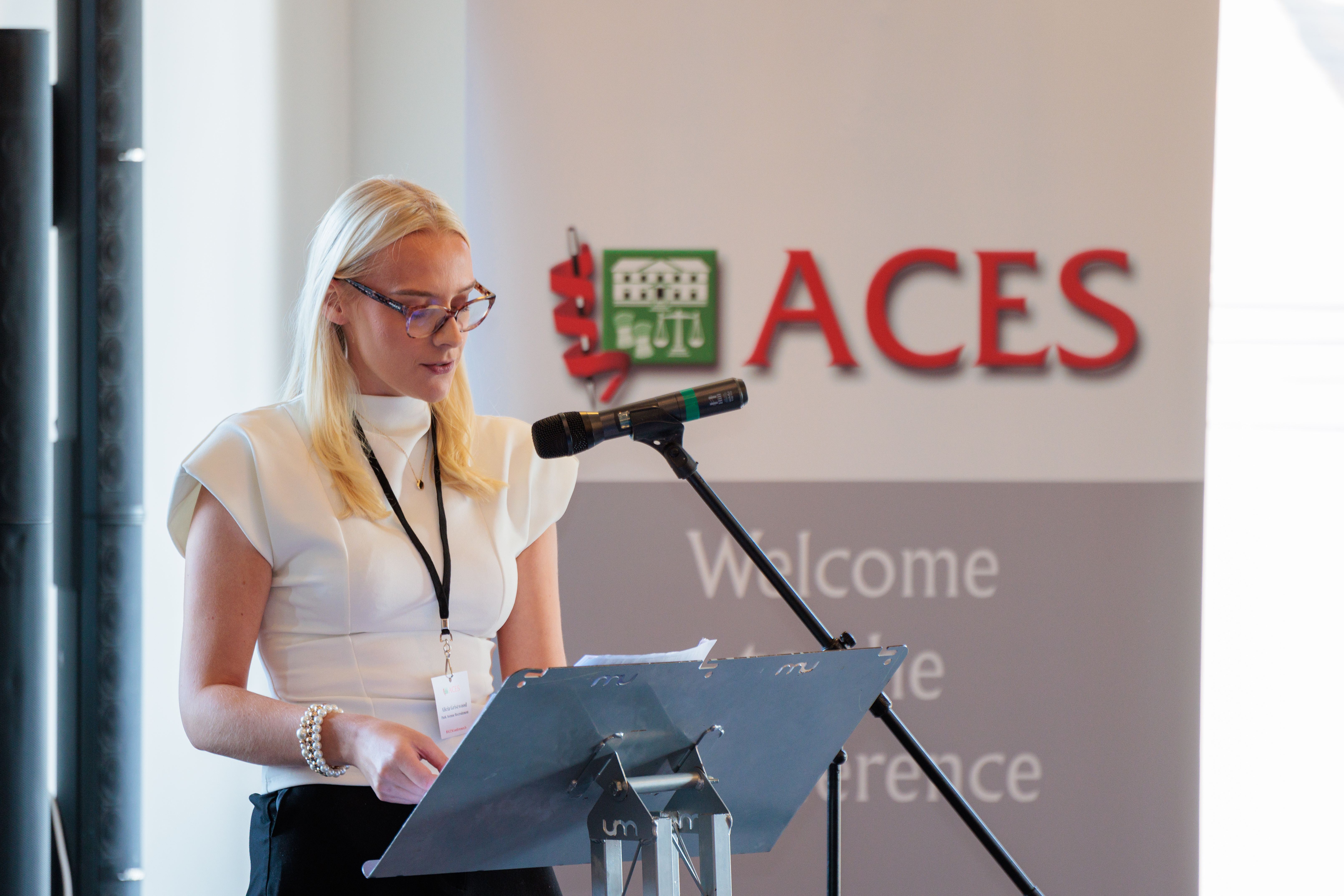
 | Alicia is Senior Executive Consultant, Park Avenue Recruitment. She is a graduate from Brighton University who originally wanted to join the Graduate Detective Programme in the Met Police. But she found her problem-solving skills were better aligned to recruitment, and today she specialises across general practice, property services, asset management, and development and regeneration at Park Avenue Recruitment. The company focuses on sourcing experienced, reliable specialists into local authorities and housing associations across the UK, working across property, housing, town planning, environmental health and finance. |
Alicia gave this mini-keynote at the National Conference before the panel session on future workface recruitment, development and retention. |
The challenges
A few weeks ago, I spoke to a surveyor who was genuinely happy in her role with a local authority. She wasn't looking for more money. She wasn't desperate to leave. She wanted to become chartered. The problem was that she couldn't see a clear route to get there. She felt the APC support she needed wasn't available and was starting to consider moving elsewhere.
What struck me was this wasn't somebody giving up on local government. It was quite the opposite. She wanted to stay, but she simply couldn't see that pathway. And I think that captures one of the biggest challenges facing public sector property today. Can surveyors access the support and the development they need in order to have a long career in the public sector?
Many of you have built long and successful careers in local government, so I'm not here to tell you how to do your jobs. But what I can offer you is a perspective from the recruitment market. Every day, my conversations involve people deciding whether to join local government, whether to leave it, whether to stay in it, or whether to come back to it. And I have a fairly unique view of what people are looking for, what attracts them, what frustrates them, and ultimately what makes them want to stay.
I focus on three themes: attracting the next generation; development and career progression; and retention and future leadership.
While we talk about these as separate challenges, they're actually all connected. The most successful organisations don't just recruit well, they develop well. And because they develop well, they retain well. And because they retain well, they become easier places for us to recruit into, and it is one big cycle.
I don't believe the next generation is rejecting local government. Too often, they simply cannot see the career that's available to them. They can see the vacancy, and they can see the job description, but they may not always see the opportunity or the development pathway, or the future that sits behind it. So there's one phrase I'd like you to remember - make the career visible. Because if people can see that opportunity, they are likely to join. And if they can see how they will grow, they will be likely to stay. And if they can see a future for themselves, they will more than likely become our next generation of leaders.
We have experienced leaders in this room who care deeply about building those strong teams. And yet when it comes to the junior talent, that's the gap I'd like us to focus on.
Recruitment
Recruitment is challenging. We are facing shortages, an aging workforce, competition from the private sector, as well as increasing workloads. But what's interesting is I don't think there's an issue with interest in public sector property. I've seen more people seeking local authority roles today than ever before, particularly younger surveyors and professionals who want their work to have a visible impact.
What's hard is generating that interest into applications. We're operating in a market where candidates have more choice, and they compare things beyond salary and day rates. Now, that's not to say that the finances are not important. People do need to pay their bills. I appreciate that. But the common question I hear is not, "What does it pay?" but it's, "What will I be doing? What will I learn, and is there longevity in this role?" Candidates are looking for responsibility, progression, and stability, and local government has a much stronger position than we think. The good news is people do want to do this work; the challenge is making that path from curiosity to career as clear as possible.
Now, why does local government remain attractive? When I speak to people who have moved into councils recently, they rarely talk first about their salary. They talk about the variety and the exposure they've had, the influence and making decisions and having a purpose. Where else can a surveyor find themselves involved in asset strategy, acquisitions, disposals, regeneration, housing delivery, and placemaking all in one place? Where else can someone relatively early in their career sit so close to decision makers and genuinely influence the outcomes? Where can they have a direct impact on residents, communities, and places?
Public sector property offers experiences that many other organisations can't replicate, but the problem is that we don't communicate that effectively. We advertise jobs through a list of duties. Meanwhile, candidates are reading the adverts wondering, "Why should I care? What's exciting about this opportunity? How will I grow, and what impact will I have?"
That's where I think we can improve. As someone in recruitment, this is not about filling vacancies. It's storytelling. It's helping someone see themselves in your organisation. Now, the next generation does think differently. They have different expectations. They want development, feedback, flexibility, and in my opinion, the most important one, transparency. In my experience, most junior surveyors are incredibly ambitious, but naturally, they want their employers to invest in them and allow them to develop their skills and challenge and learn.
One of the most common complaints I hear isn't that they're overworked. It's that they don't know what their next step looks like. They don't know how promotion decisions are made, and they don't know who's advocating for them. And that's incredibly important, because if somebody cannot see a future with you, then they will start looking elsewhere.
Development
I genuinely think that development is one of the biggest opportunities available to local government, and that's because development is one of the most powerful retention tools available to you.
When we talk about development, the obvious things come to mind: training, APC support, professional qualifications, and yes, those things matter. But in my opinion, it's the soft skills. It's building confidence, giving exposure to tasks, and building trust – give them responsibilities.
Those moments shape our future leaders, so please create them. APC matters a lot. For many graduate surveyors and assistant surveyors, it can be the deciding factor. The authorities that attract the strongest junior talent don't just talk about development, they demonstrate it. They show people how they will become chartered, what support they will receive, and what experience they will gain along the way. And the candidates notice, and they talk. And before long, your reputation will start recruiting for you
Retention
Retention's something that we discuss as something that starts when somebody's leaving, and I would argue it needs to start a lot earlier, probably from day one. The organisations that retain people don't necessarily have unlimited budgets, the highest salaries, or the most resources: they communicate effectively, and they develop people's skill sets. They create opportunities and recognise achievements. They build strong teams.
Because people join organisations for the reasons we initially think - the salaries, the progression opportunities, and the pensions, but they stay because of the people, the quality of your leadership, and the culture of your team. And those things matter enormously. The future leaders are already sitting in our teams.
The ambition is out there. There are talented people entering local government today who genuinely want long-term careers in the public sector. They want to influence strategy, they want to make places better, and they want that challenge. And if we're serious about succession planning, we cannot wait until somebody is ready for a leadership role before we start developing them. We need to start earlier, and we need to help people see what is possible, because somewhere within many of our teams are the future heads of service and the future directors of service, and I really like to think the future chief executives.
Recurring themes
Before I finish, I wanted to share a few recurring themes that I'm hearing from candidates. When people accept jobs in local government, it's usually because the role offers variety, flexibility, and purpose.
And when people decline those opportunities, it's because they can't clearly see those things.
And when people leave organisations, the reasons are consistent, from a lack of recognition, to minimal progression opportunities, to feeling just generally stuck.
Now, what's striking is that very few of those issues are fundamentally about property. Those are people issues, communication issues, development issues, and that is a brilliant dilemma for us to have, because we can influence these things and we can change them.
The future leaders of public sector property are not all somewhere outside our organisations waiting to be recruited. Some of them are already sitting in our teams today, and our responsibility isn't simply to fill the next vacancy. It's to make that career visible, to show people the work they can do and the impact they can have.


Comments