
RICS PRESIDENT KEYNOTE SPEECH
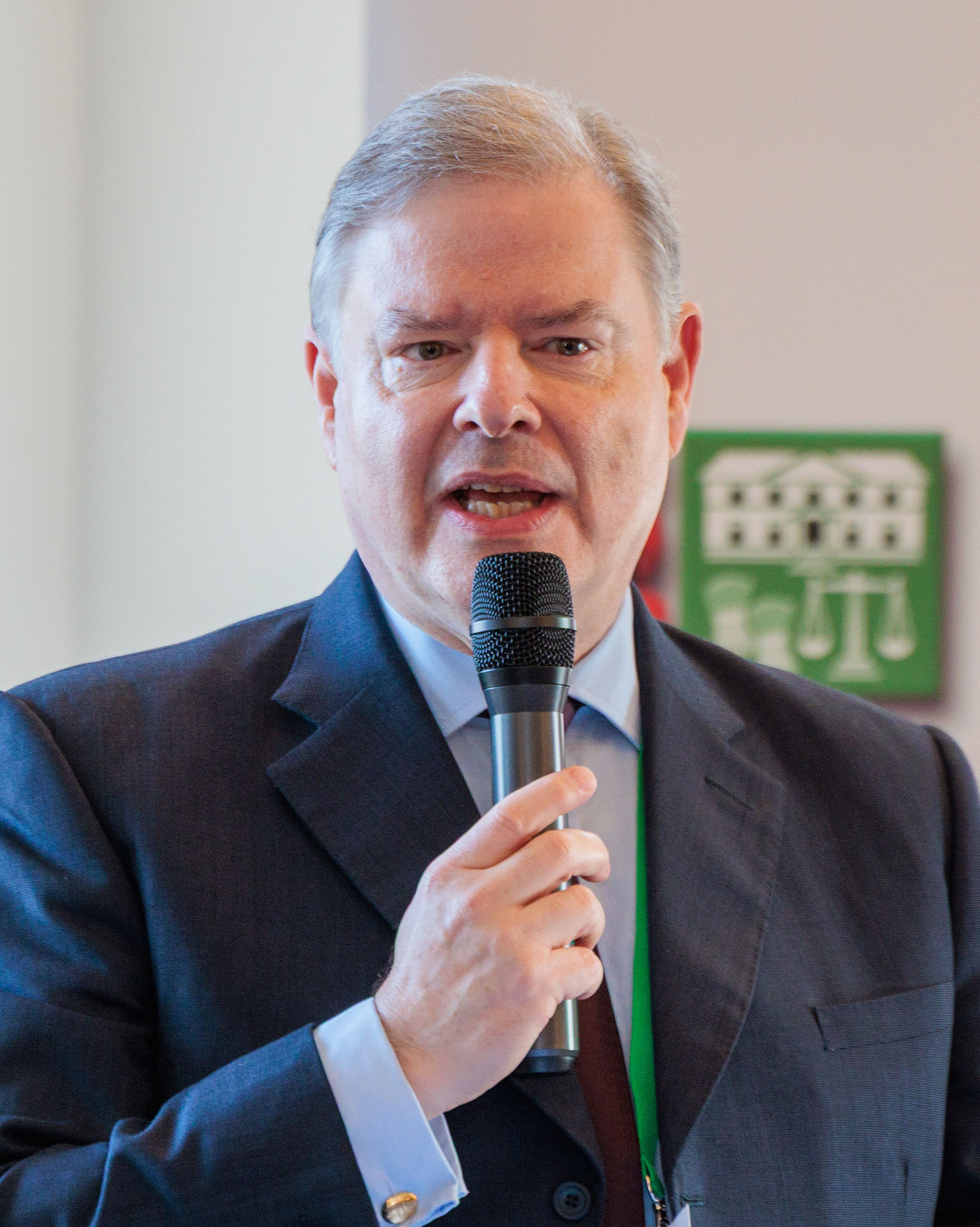
 | Nicholas Maclean is a Fellow of the RICS and serves as President and Chair of the RICS Governing Council. Nick has served as an elected member and Chair of the RICS Governing Council, an RICS Board Member, Chair of the Membership Services Committee, and Chair of the RICS MENA Market Advisory Panel. Based in the United Kingdom, Nick established CBRE Middle East in 2004 and served as Co-Chairman and Managing Director until leaving the business at the end of 2024, after a 37-year career, to focus on his RICS presidency. Nick is a GlobalScot, the Scottish Government’s Trade & Investment Envoy to the UAE and received the First Minister’s Award for Services to Trade and Bilateral Relations in 2023. He was made an OBE in the 2024 King’s Birthday Honours, holds the Reserve Decoration and has been recognised by Arabian Business among the UAE’s leading business figures. |
Nicholas gave the keynote speech at ACES’ National Conference. This is an edited transcription of his speech. He was introduced by Alan, ACES President, saying that it was an honour to have him with us. |
I am delighted to be here. Attendance at this event is probably one of the most important events that I’ve attended over the last two or three years, because there is no component of government policy which doesn’t have an impact on housing or infrastructure.
We’ve heard this morning about lots of problems that government has in looking for solutions for housing, infrastructure, or regeneration of city centres. I’ve thus far this year spent 100 days outside of UK talking to governments and regulators and lawmakers around the world, and I can tell you that exactly the same conversations are happening wherever I’ve been, and they are still searching for solutions. So, if it’s any comfort, this is not a UK issue. This is a global issue that we can only solve by working collaboratively.
Three issues
There are three things which need to be mentioned, however controversial. We need to talk about immigration and its impact on housing, and the potential solution that immigration gives us in the skills gap. We also need to talk about capital, not its availability which is plentiful, but we need to be much more creative in the way we repay that capital, or how we share the upside to bring and attract more capital. So I don’t think money is the issue. The final thing is the location of new housing schemes and delivery of housing, and whether or not they match the jobs available, and perhaps the utilities that are available in some locations. RICS is doing a piece of research which suggests that perhaps that match is not properly aligned at the moment.
Three objectives
But most of what I wanted to speak about is the importance of this organisation to counter some of the negativity and some of the problems we face. But I want to remind you of the skill set that exists in this room and in the joint membership of ACES and in RICS going forward. RICS has changed direction a little over the last three years or so, and we are aligning the objectives that we’ve set for ourselves and our members under three banners: education, influence, and confidence.
All are embodied in our public interest and public responsibility duties, but also in the influence of the careers of everybody in this room. Lots of people are proud to be members of ACES and of the RICS. We have relied too much and for too long on that pride to get us through tricky times. Where we’re going now is to change tack and ensure that we emphasise the pride that you may have of belonging to these institutions; but we also have to give you a tangible benefit. So being a member of the RICS has to give you a career-enhancing, a career-developing opportunity and advantage, and an advantage over those people who are not members of our institution. Otherwise, why would you bother paying £500 a year to be a member? And that’s much more important now as we look at the potential future membership of this institution.
Changing demographics and careers
Because of our demographic trend, we are looking at a fundamentally different structure to our national societies here and around the world. And that age profile is differing both because the end users of the housing that we build is going to be different in 25 years’ time, and the people who come into these professions are going to be different.
So in the UK, we have more people over 70 in practice than we do under 25. That is not good. And we, next year, will be doing about 9,500 APCs, but we will be retiring about 8,600 members of this institution. So we are net gaining in the UK, but that gap is declining as our age profile grows. We have to do something significant about that.
RICS, under these three objectives, is fundamentally going to change the way we educate both prospective surveyors and existing surveyors, and give an ability for people who are, let’s say, 25-year-old valuers who want to be a 35-year-old hydrographer or land surveyor, because we estimate that people are going to go through three phases of their career, not like me, having spent all my life at the same firm doing the same thing. That’s going to change. We need to ensure that this profession that we so, so cherish, and is so important to our communities and the people that we serve, our clients and governments and lawmakers, we need to make sure that it’s properly staffed. And we are in an acute danger that we are not attractive enough as a profession to juniors coming in.
RICS has about 82,000 undergraduates studying on an accredited course somewhere in the world today, and next year we expect about 9,500 to join the profession. That means that we are taking about 10% of the people who could be members of our profession. And that’s because, firstly, we don’t pay our graduates enough. Secondly, because we are not attractive enough in a very competitive marketplace here or elsewhere. And this competitive positioning is going to get worse over the next few years, as more and more people see the advantages of working in technology, in AI, and in defence. So we have a competitive disadvantage; so we’ve got to make sure that everyone who has an interest in the way that we live our lives going forward is attracted into our profession.
So the way we educate prospective and existing surveyors is going to be a very important component of our journey forward. Tomorrow, RICS Governing Council will hopefully sign off a new educational plan, which will mean that we invest our largest ever capital sum on redesigning our educational programmes, to incentivise younger people and mid-career people from completely different walks of life to come into this profession, and show the advantage of a career in surveying or the built environment. And that will mean ensuring that membership of this institution, and in due course, fellowship of this institution, has an academic equivalence, to help mobility of the profession, and recognise that there’s something tangible about being a member of RICS.
So in other words, it’s all about tangibility. If we look across the piece at people who are coming into this profession, we’re recruiting from far too narrow a segment. We need to diversify. We see a decline in undergraduate numbers; we see limitations in the number of apprenticeships that are being given; we see other forms of vocational training just not being available to some.
Influence
We have 142,000 members practicing in 146 countries, and that experiential database is extremely valuable to government. But somehow, the messaging that we’ve been giving, whether it’s on upward-only rent reviews, leasehold reform, renters’ rights, land charges, reforms of the Landlord and Tenant Act, they are not hitting home properly because, it seems to me, there’s an inconsistency in the objectives that some parts of our lawmakers’ thinking is looking.
And on one hand, we want the private sector to deliver more homes, but on the other, perhaps there’s a feeling that they are the devil incarnate. We have got to raise the volume of our voice to allow government to make less, ‘unintended consequences’ of some pieces of legislation. Housing starts in London are down 94%. I think that’s an own goal. So we need to raise the volume of voice, and that comes from collaboration. In the last few days, we’ve talked to RIBA, the planners, the engineers. ACES too is so important. If you look at the professional institutions working in the built environment in the UK, that’s about 620,000 people, who combined can say it at a much higher level. We need to look at that closely, collaborate more, and listen to one another, so we can adopt policies that will help government.
RICS has been accused of being rather arrogant to government over the last few years. We’re changing that. We need to be able to talk to government in a way that they listen to us and think we’re being helpful. And it seems to me the concept of any professional career is the ability to deliver bad news well with an alternative suggestion. There’s no point in saying, “No, sir, no, madam, that’s not going to work”. We have to say, “No, sir, no, madam, but this may do.” And through our 142,000 members around the world, we can reinforce that this is what happened in Hong Kong, Luxembourg or South Africa. And that’s the kind of value that we need to bring to the conversations.
Confidence
If we regain this influence, then we regain some of the confidence that we’ve lost, not just among our clients and governments and lawmakers, but ourselves. If we think we are the best people, and I think we are, then we need to charge more. We need to ensure that there’s a tangible commercial benefit to membership of these institutions, whether it be ACES or RICS or the RIBA, etc. Because we need to instil in 18-year-olds, in 14-year-olds, that membership of these professional bodies and all they stand for, their public interest, responsibility, the ethical standards by which we practice, are valuable to the individual and to society and to our clients.
That’s what we’re going to do over the next few months and years. But this takes quite a lot of effort. RICS has 726 staff. We are at full capacity on the work that we do at the moment, and it’s not enough. So we need to rekindle and mobilise the volunteer spirit, to allow us to do more because the demands on our members, on the institution, and others is growing every day.
We turn over about £77 million. If we follow this change to the educational system, we’ll be spending £87m. Fortunately, we’re very well-endowed financially; we’re in good shape, and we’re borrowing from ourselves to fund what we think is the single most important journey that we’ve got going forward. But going forward, we need fundamentally to change what we do and make ourselves competitively attractive to the people who will make a difference in our profession.
I’ve spent the last three weeks in Asia-Pacific, mostly in China. One of the most important things that is an unsung benefit of being members of professional institutions is our ethical standard. So speaking to the housing minister in Beijing 10 days ago, what she wanted us to do is, how can we instil the standards by which RICS members practice here in China? And the answer is we hold our members to account. But we have a big conundrum - we have no statutory authority here. So we work hard to make sure that we uphold the standards we have, but it becomes a little trickier overseas.
So the principal reason why I’ve been spending most of your money travelling at the moment is to seek equivalence in our qualification going forward, not just the academic standard, but to allow mobility among our members. And that, I think, is going to be a key issue in attracting more people into the profession.
In my final two minutes. The issues with the conversations with government are critical. We have access to governments across the world, but the knowledge that governments want from us is experiential. So RICS has been asked, before we speak to the European Commission on 15 October, to talk about what the UK is doing in housing policy. I went to the European Commissioner of the Parliament two months ago, and we were accused of being a British institution, and post-Brexit, why would we listen to you? No, no, no, no. We’re not a British institution. We’re an international institution that happens to have headquarters in the UK, and we have organisations and conferences like this that talk about these solutions going forward.
Everyone around the world wants to hear the solutions, because those conversations are happening elsewhere. So this concept of confidence is very important, because people from outside the UK think that these conversations are at least as important as we do here. And that’s why this ACES conference, I think, is so important, because you’re at the sharp end of delivery, and it’s not just about bricks and mortar, or the cash. It’s about every single governmental policy that any government, including the UK, delivers. If we find solutions, then we find solutions for other countries too.
And the value of soft power of those solutions to UK PLC is very, very important. So don’t think about being a member of ACES. Think about being a caped crusader, a street fighter for solutions to housing, not just for the UK, but around the world.
Thank you very much.


Comments