
UNLOCKING COMMUNITY ASSETS What council officers can learn from each other

 | Bex is co-director of Platform Places and Footwork, where she facilitates a national movement of 50+ 'Community Asset Developers' and councils – who support each other to transform their town centres for economic, social and ecological resilience. Bex also co-founded circular economy business Library of Things. |
Bex outlines some community asset case studies of entrepreneurial local community organisations, which “cannot work without partnerships with supportive local authorities, which can be game-changing.” |
Introduction
When Graylingwell Hospital in Chichester was sold to developers in 2009, the community didn't just hope for the best. Chichester Community Development Trust (CCDT) was established as a condition of the sale, with a mandate to represent local people and shape what came next.
Fast forward to 2025 and CCDT, in partnership with Chichester District Council and others, has activated more than a dozen new, disused and underused spaces for community needs: community gardens, a wellbeing centre, learning spaces, sports clubs, art studios and bike repair shops.
That is what genuine council and community partnership look like in practice. And it is the kind of story we hear more and more.
But for many council property and regeneration officers, a story like this raises as many questions as it answers. How did the council manage the risk? Where did the capacity come from? And how do you bring colleagues in legal, and finance along with you?
These are exactly the questions we have been asking too.
A growing national movement
At Platform Places and Footwork Trust, we are facilitating a national movement of over 50 Community Asset Developers. Entrepreneurial, locally led organisations like CCDT, Civic Square in Birmingham, Hastings Commons, and Back on the Map in Sunderland, securing and activating portfolios of assets to regenerate their neighbourhoods for resilient local economies, communities and the environment.
They all agree on one thing: partnerships with supportive local authorities can be game-changing.
Together with ACES and others, we have been speaking with council officers across England who have been involved in exemplary approaches to community assets, asking how it started, what the barriers were, and what made it work. Here are some of those stories. And an invitation to join what comes next.
How do we balance risk and opportunity?
The last thing any local authority wants is to transfer an asset to a community organisation, and watch it struggle. We hear that concern regularly. It is legitimate.
Local authorities need to manage risk, and balance this with the need to deliver social value and resilient local economies. When it comes to community assets, the worry is that community organisations simply don't have the capacity to manage complex assets and capital build projects. As one officer put it:
"the last thing we want is for a council to transfer assets to a community organisation, then it goes bankrupt and we have to take back the liability ten years down the line."
But it is also, in most cases, a perceived risk rather than a proven one. And the way that risk is framed inside a council determines everything that follows.
In the Wirral, Kate Pierce, Regeneration Delivery Lead at Wirral Borough Council, has worked closely with 6 community organisations to secure and activate buildings across Birkenhead through £25m in Towns Deal funding. Her experience is unambiguous:
"They're all doing really well. I'm really proud of all of them for getting to the point where they're actually delivering, the challenge of getting to this point should not be underestimated. These organisations don't have a big workforce or experience of delivering capital build projects of this size and scale. All credit to them for making it work."
Community organisations, when properly supported, can and do manage complex capital projects. They can also access funding from foundations, social investors, heritage bodies, and community share offers that local authorities typically cannot. The risk calculus looks different once that is understood.
But Kate is candid about what proper support actually requires. Wirral's approach didn't start with the Towns Fund bid; it started years earlier, with sustained relationship-building with community organisations, and a genuine commitment to listening to what they needed. When the bid opportunity came, the trust was already there.
That listening had practical consequences. When community organisations flagged that retrospective grant payments were unworkable for small organisations without cashflow, the council changed the system.
“5 years ago, our usual approach was to enter a grant agreement with an organisation, then release the funds only once they had shown us evidence of their receipts. I realised early on that this wasn’t going to work for these small organisations – because they didn’t have the cashflow to take on these huge projects. I was then able to have conversations with my Head of Finance and Director of Regeneration to get their buy-in to change our systems.”
In another town in Yorkshire, a complementary approach has been to get community organisations into buildings quickly on a tenancy at will or short-term lease, rather than waiting for a fully formed business plan. The assets team there find that organisations almost always refine their plans once they are actually in the building.
“So many people change their business case once they’re in the building – based on feedback from the community, for example.”
It builds trust on both sides. Officers meet organisations in-person, from the moment they express interest, myth-busting early on, and aligning expectations on timelines and probabilities. For community organisations, that contact is often the difference between a viable plan and one that was never going to work.
But knowing this works and having the capacity to make it happen are two very different things. So where does that capacity come from?
How do we find capacity?
Knowing that community asset strategies and policies work is one thing. Having the time and headspace to write, update and deliver these strategies and policies is another. This is perhaps the most honest barrier we hear from officers: not resistance to the idea, but a lack of time and resources to deal with the level of demand from communities, and address the number of under-invested assets.
It is a Catch-22 that many people in this field will recognise. Making the case for dedicated resource requires someone already to have the headspace to do so. And without that resource, the work either doesn't happen or falls to someone carrying it alongside a very full day job.
Sheffield found a way through it.
Sheffield was once a national pioneer in Community Asset Transfers (CAT), but the onset of austerity and the disbanding of its Community Buildings Team in 2010 left the council for over a decade with no capacity and no formal policy. To kickstart discussions, an interim policy was approved in March 2024 and Diane Owens, Community Services Manager, was seconded from another community-facing role within the council to review the backlog of CAT requests, and work with the Voluntary, Community, Faith, and Social Enterprise (VCFSE) sector to co-design a new CAT policy.
What followed was 18 months of conversations with over 100 local organisations and individuals, cross-party councillors, and real cases rather than policy templates. Capacity started with making time to listen and learn from the wealth of expertise in the city.
The result was strong political backing, including £410,000 in revenue funds for a dedicated five-person team to deliver CATs going forward, along with a grant scheme, and funds to support VCFSE sector-led initiatives for training, peer support, and strategic voice and influence.
This CAT policy co-design process has started to shift the culture inside
Sheffield City Council too.
"Different teams had different starting points but now I'm starting to hear a shared language of community benefit, of partnership and potential rather than of risk." - Diane Owens, Community Services Manager,
Sheffield City Council:
"Your council doesn't need unlimited resources, but a clear process, a willingness to listen and be honest, and officers who understand community value."
Meanwhile, in a nearby town, the key to the council's new community assets approach was a single point of contact that community organisations could trust.
"Revenue funding for a dedicated role has been game-changing. It's meant we can go out, engage with community organisations, and make the process uniform. The groups now know who their go-to person is."
Fifteen assets have been transferred since – from libraries, to town halls, to sports clubs – all on 125-year peppercorn leases. Trust and capacity has been built with a range of community organisations – all supported and enabled by one dedicated, resourced council officer.
But securing resources and redesigning the process is only part of the picture. The harder question is what happens inside a council when you ask people to think differently about the buildings they manage and the communities they serve.
How do we shift mindsets internally?
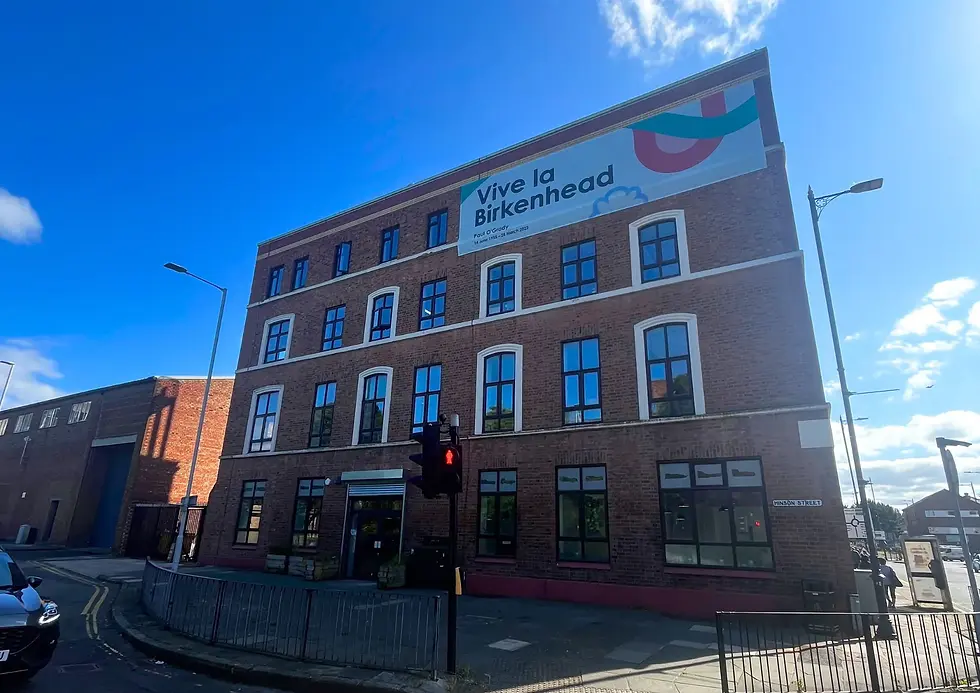 |

Credit: Make CIC Credit: Future Yard
Securing an asset for a community organisation rarely depends on one team. It depends on cross-departmental working, including legal and finance teams, who can feel a long way from the front line. They typically don’t have direct relationships and trust with the non-council leaders delivering this work.
In the Wirral, Kate Pierce found that the most important groundwork was not procedural. It was relational.
“Obviously as a council we have to be aware of and manage risk. It’s been critical to get my counterparts in teams like legal and finance to see their role as not just to minimise the council’s exposure to risk, but also to help deliver these projects and realise the ambition. I’ve wanted them to feel part of this delivery team and share the positive outcomes.”
Abstract arguments about community capacity are hard to win in a meeting room. Kate's solution was to take colleagues to visit community organisations and venues in-person. Both Make CIC and Future Yard were secured and activated through Towns Deal funding in partnership with Wirral Council:
“The moment when things shifted was when we showed colleagues and senior leaders around Future Yard and Make CIC in-person. They all suddenly got it! There was a lot of energy in the room that day about what was possible.”
Seeing is believing. Strong director-level leadership matters too. Officers need to be able to speak candidly to senior leaders, to flag where processes are not working, and propose alternatives. In the Wirral, that trust existed. It is what allowed Kate to change the grant payment system.
Shifting mindsets is not a culture change programme. It is a series of conversations, relationships and moments. And it is entirely within reach.
The movement is growing - join it!
The Wirral, Sheffield and Calderdale are not exceptional councils with exceptional resources. They are councils that chose to look at the problem differently, backed their communities and built the internal relationships to make it work. That is replicable. And it is happening more and more.
Across England, council officers from Bristol, to Camden, to Plymouth, are beginning to share this learning, compare notes and shape what good practice looks like from a local authority perspective. We are part of that conversation with our collaborators ACES, New Local, Locality, One Public Estate and the Greater London Authority – and we want you to be too.
Read more case studies from councils working differently with community assets at:
Have a story to share? Get in touch. We would love to include you in our next peer conversation with council officers working in this space.


Comments